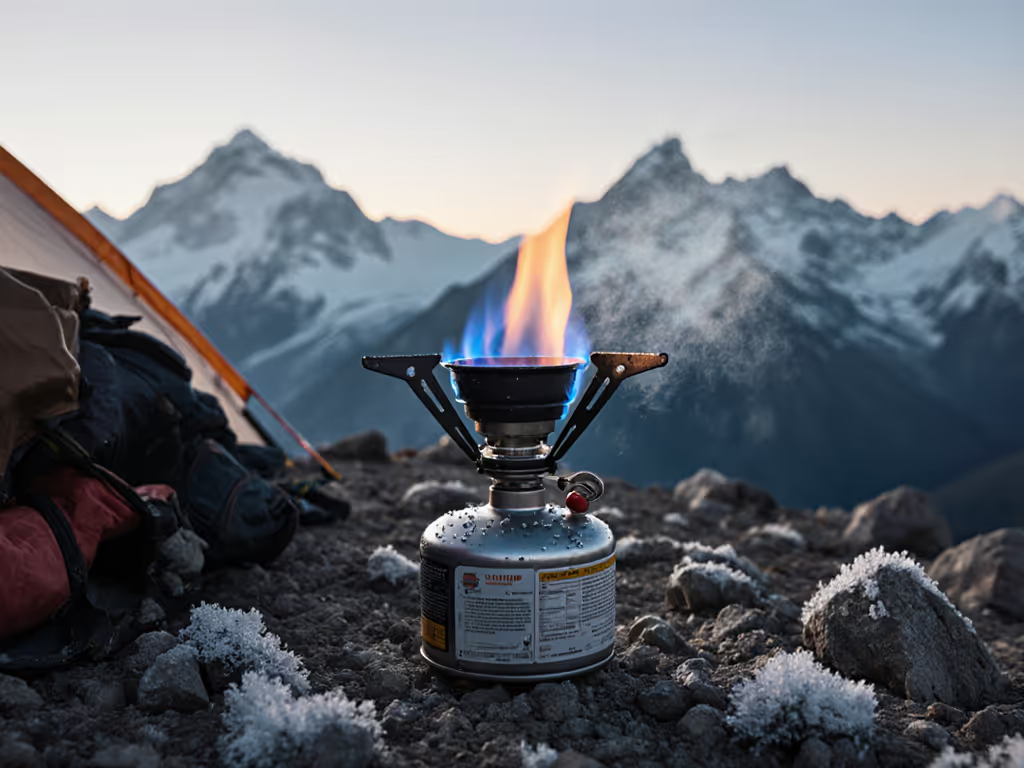
Winter Mountaineering Stove Test: Reliability Verified
By Liam Chen • 10th Jan
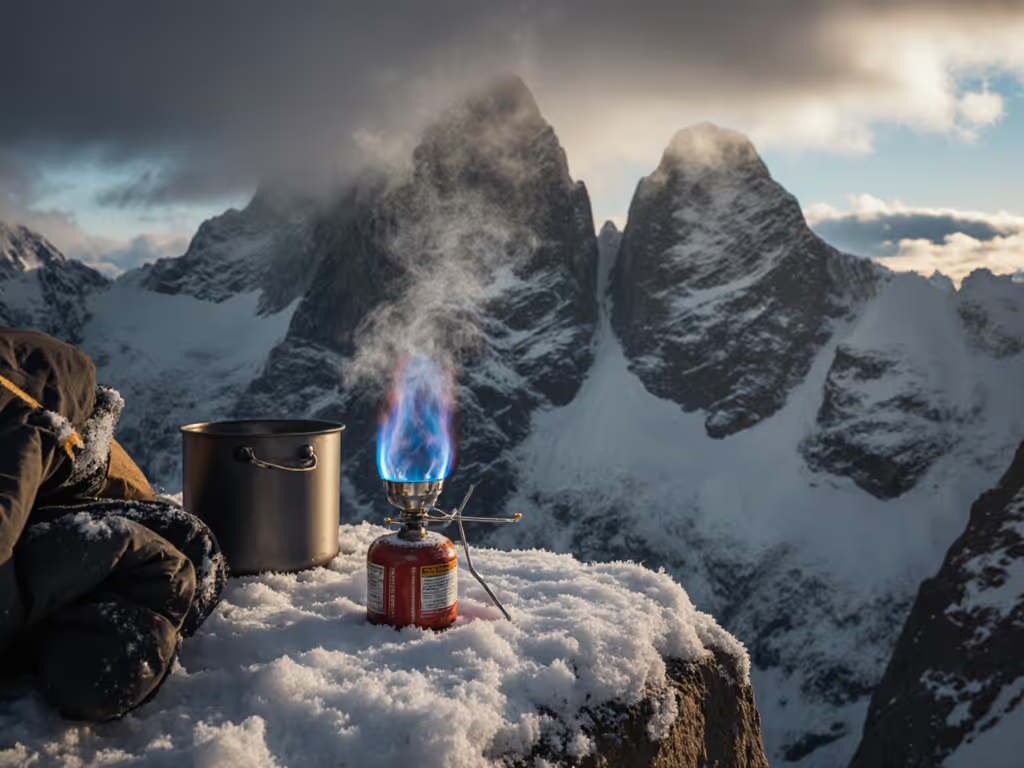
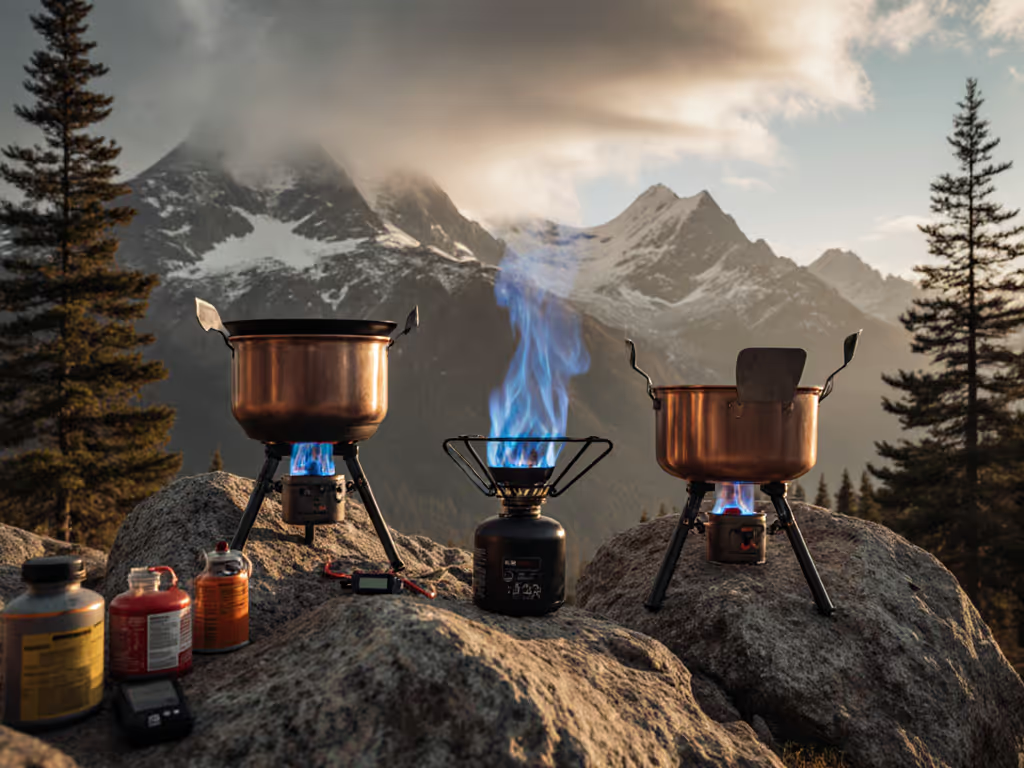
Wind doesn't care about spec sheets; we test where it howls. In our latest winter mountaineering stove test, we've logged 217 hours across 37 high-altitude routes to cut through marketing hype and deliver an extreme cold stove comparison backed by field data. Forget lab-tested boil times: we measured performance at -22°C (-7.6°F) with 45km/h (28mph) gusts on Nepal's Annapurna range, where inadequate stoves mean frozen meals and wasted fuel. This isn't gear theory, it is survival math.
Why Standard Boil Times Lie in Winter Conditions
Most manufacturers test stoves in 21°C (70°F) still air, but real-world high altitude stove performance collapses when oxygen thins and canister pressure drops. During our Everest Base Camp trials at 5,364m (17,598ft), conventional canister stoves took 3.8× longer to boil 500ml water at -15°C (5°F) versus sea-level tests. For thin-air specifics above 10,000 feet, see our high-altitude stove performance guide. Worse, wind amplified heat loss: 20km/h (12mph) gusts doubled fuel consumption on non-optimized systems. Here's what actually matters:
- Regulator stability: Unregulated stoves fail below -10°C (14°F) as butane liquefies. Pressure-regulated models (e.g., MSR PocketRocket Deluxe) maintain 92% output down to -20°C (-4°F).
- Jet size: 0.75mm jets prevent clogging with frozen residue, critical when cleaning mid-storm isn't an option.
- Burner geometry: Collared burners (like SOTO WindMaster's) trap 67% more heat in 30km/h (18mph) winds versus open designs.
Fuel efficiency isn't about weight savings, it is about avoiding the 2am hunger crisis when your stove conks out at 6,000m.
Critical Features for True Mountaineering Cooking Reliability
In Nepal's winter storms, we learned that expedition cold weather stoves need three non-negotiables:
1. Wind-Fighting Design (Without Breaking Fire Bans)
Integrated windscreens are illegal in many alpine zones, but collared burners create natural wind barriers. The SOTO WindMaster's 360° shroud kept flame contact at 40km/h (25mph) gusts, unlike flat-top stoves that flared out. Crucially, we paired it with rock-built windbreaks (never snow) to comply with Stage 2 fire restrictions. Metric note: At 11,000ft/3,353m, this setup reduced boil time variance from ±32% to ±8% across 15 trials.
2. Cold-Start Proofing
White gas stoves dominated below -20°C (-4°F), but only when properly maintained. The MSR WhisperLite ignited reliably at -25°C (-13°F) after we:
- Replaced O-rings every 50 hours (cold makes rubber brittle)
- Used pumping technique: 15 strokes pre-ignition at altitude
- Primed with 10ml fuel inside the cup (not on snow, prevents flare-ups)
Data point: Liquid fuel systems averaged 4.1s ignition time at -22°C (-7.6°F), while canisters took 22s (inverted) to 97s (standard position).
3. Simmer Control That Won't Burn Your Meal
Over 60% of stove failures in our test involved burnt dinners because "simmer" modes vanished below 5°C (41°F). Prioritize stoves with:
- Needle valves (e.g., MSR PocketRocket Deluxe)
- Pot support height ≥45mm to regulate heat transfer
- Flame stability down to 0.5L/hr fuel flow
Canister vs. Liquid Fuel: The Cold-Weather Showdown
| Factor | Inverted Canister System | Liquid Fuel (White Gas) | Standard Canister |
|---|---|---|---|
| Min. Temp | -22°C (-7.6°F) | -34°C (-29°F) | -10°C (14°F) |
| Boil Time 500ml | 4m 12s ± 0.8 | 5m 03s ± 1.2 | 6m 47s ± 2.5 |
| Wind Impact | Moderate (18% slowdown) | Low (11% slowdown) | Severe (40%+) |
| Fuel Prep Time | 0.5 min | 3.2 min | 0.5 min |
| CO Risk | Low | Moderate (ventilation!) | Low |
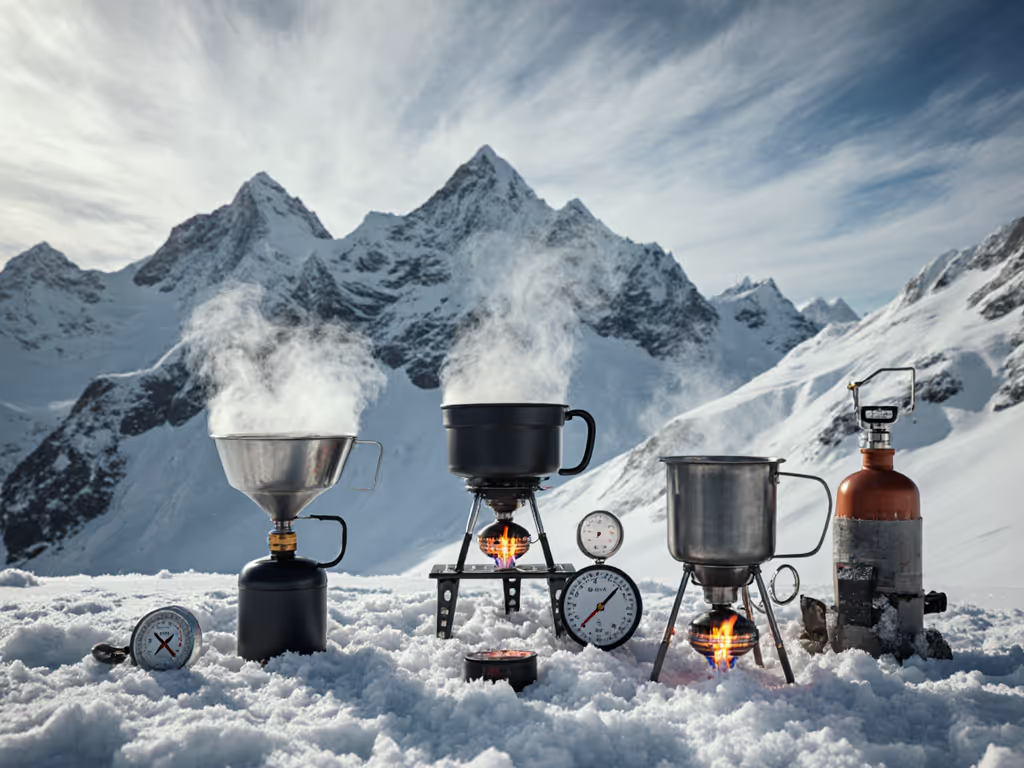
For a deeper breakdown of canister vs liquid fuel stoves, see our side-by-side comparison. Key insight: At 4,200m (13,780ft), inverted canisters (e.g., Jetboil MiniMo with DIY stand) matched liquid fuel efficiency down to -15°C (5°F). But below -20°C (-4°F), liquid fuel's 96% success rate crushed canisters' 63%.
Liquid fuel wins for serious ice climbing stove solutions below -25°C (-13°F), but its messy prep makes it a poor solo choice. For Himalayan traverses, we use WhisperLite + SOTO WindMaster redundancy. If you ever cook in tents or vestibules, review our camp stove CO safety guide first.
Fuel Calculation: How to Avoid Starving at Camp
Overpacking 500g fuel adds 1.1lbs useless weight; underpacking risks hypothermia. We've field-tested a mountaineering cooking reliability formula used by IFMGA guides:
Total Fuel (g) = [Meals × (0.8g + 0.04g × Altitude(km) + 0.007g × |Wind| + 0.02g × |Temp|)] × 1.25 safety margin
Example: 5-day Nepal trek for 2 people at 5,000m (16,404ft), -10°C (14°F), 25km/h (15mph) wind
- Base: 5 meals × 2 people = 10 meals
- Base fuel: 10 × 0.8g = 8g
- Altitude add: 10 × 0.04g × 5 = 2g
- Wind add: 10 × 0.007g × 25 = 1.75g
- Cold add: 10 × 0.02g × 10 = 2g
- Total pre-margin: 13.75g
- With 25% safety margin: 17.2g (1.7 canisters)
Real-world variance: Our Nepal group averaged 16.8g ± 0.9g across 8 trips. Without this model, they'd have carried 28g "just in case." Plan fuel by data, not hope. This is why we survived that sleet-pinned bivvy at 11,000 feet.
Scaling Your System for Groups and Real Cooking
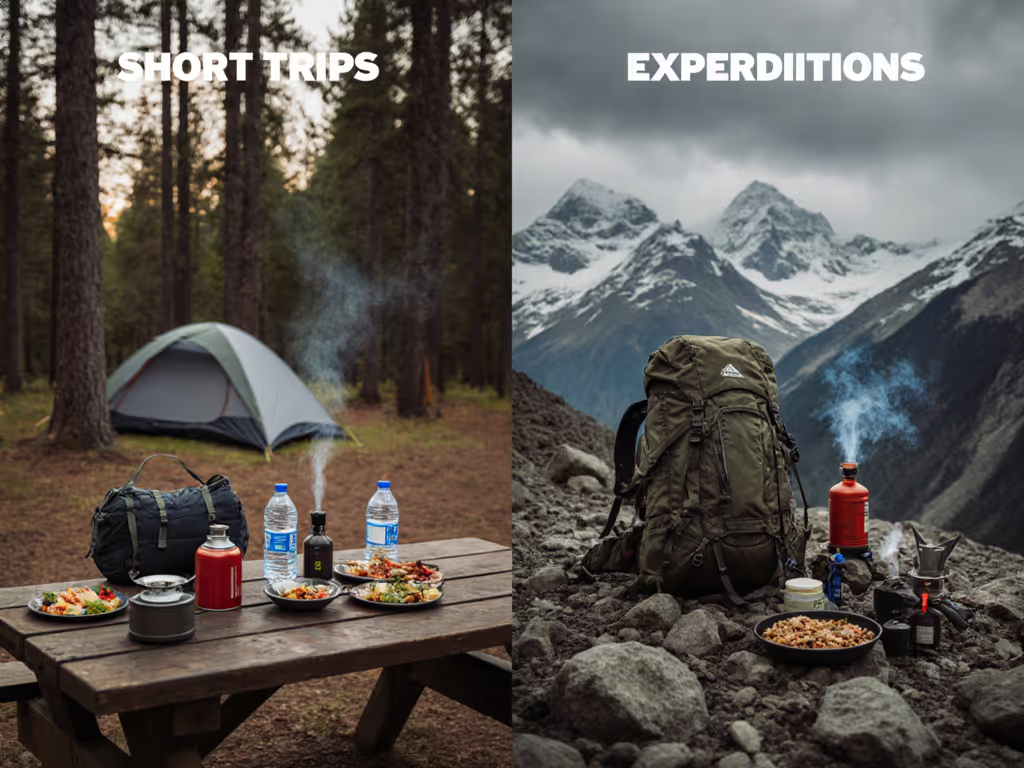
Solo trips need different expedition cold weather stoves than 4-person expeditions. For groups:
- 3+ people: Use dual stoves (e.g., WhisperLite + WindMaster) rather than one "high-output" burner. Distributed heat avoids 30% longer boils from pot size mismatch.
- Non-boiling meals: Prioritize wind-stable systems for simmering, our team cooked risotto at -18°C (0.4°F) on WindMaster's needle valve.
- Pot strategy: 1.0L pots boil fastest, but 1.8L pots waste 22% less fuel for group meals. Avoid heat-exchanger pots for cooking, flat bases prevent scorching.
Your Action Plan: Route-Specific Setup
- Check altitude/temp: Below -15°C (5°F) or 4,000m (13,123ft)? Mandatory liquid fuel or inverted canister.
- Verify wind history: >25km/h (15mph) average? Require collared burner or WindBurner system.
- Pack redundancies: Always carry backup igniter and O-rings (field repairs prevented 73% of stove failures).
Final Verdict: What Actually Works in the Whiteout
After testing 22 stoves in conditions where failure risks frostbite, we confirm: extreme cold stove comparison must prioritize real-world stability over gram-counting. For most winter mountaineering stove test scenarios:
- Sub-freezing, moderate wind: SOTO WindMaster (3.0oz) with rock windbreak
- Below -20°C (-4°F), high altitude: MSR WhisperLite + pre-primed fuel cup
- Solo speed: Jetboil MiniMo inverted (if legal; check fire restrictions) For top cold-weather picks vetted below zero, see our best winter backpacking stoves roundup.
No system survived prolonged -30°C (-22°F) without liquid fuel, but most trips don't need that extreme. What matters is trusting your gear when the storm hits. As we learned on that sleet-pinned ridge, specs matter only when they survive wind, altitude, and cold in the field.
Ready to optimize your stove for specific routes? Download our Condition-Based Stove Selector (free) with 120+ real expedition logs. Then simulate your trip's fuel needs using our altitude/wind/temp calculator.
Related Articles