Wind Resistance vs Fuel Efficiency: Backpacking Stove Tradeoffs
By Amina Al-Khalil • 11th Dec
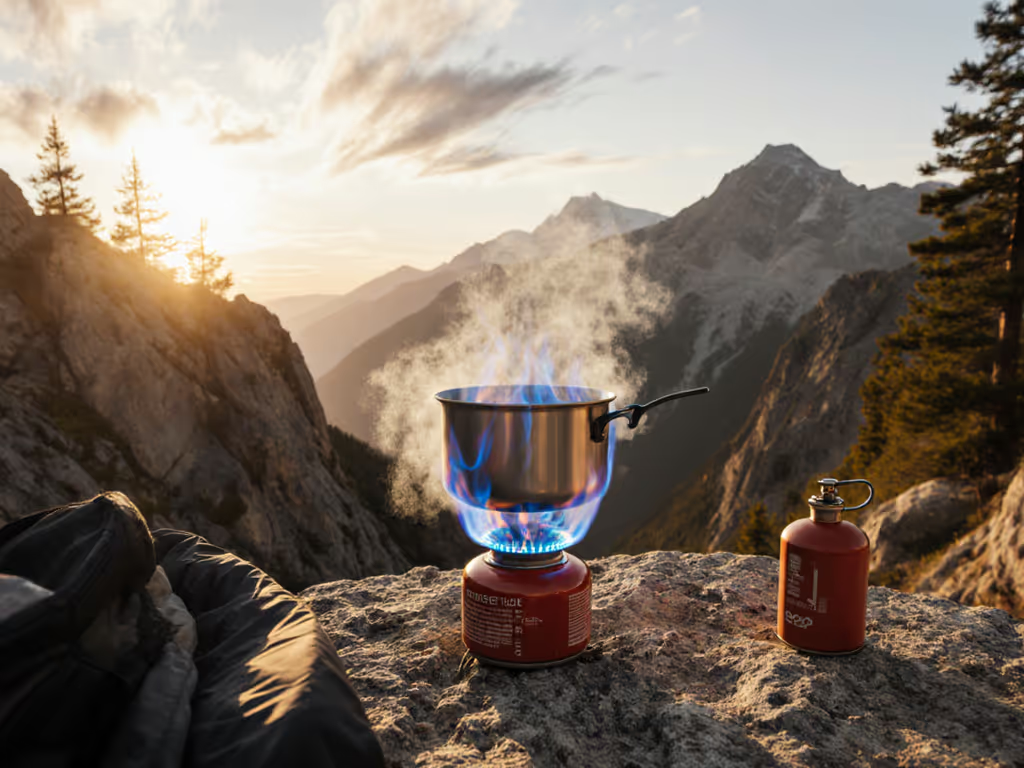
When wind whips across your campsite and your stove's flame dances like a candle in a hurricane, you're facing the most immediate wind resistance vs fuel efficiency challenge in backcountry cooking. This isn't just about comfort. It is about whether you'll get dinner cooked before dark or be left with a half-empty canister and a belly full of cold dehydrated meals. Understanding these stove performance tradeoffs means the difference between a reliable kitchen in any weather and constant frustration when conditions turn challenging. As someone who's taught hundreds of campers how to maintain their gear in the field, I've seen too many trips derailed by this single overlooked factor.
Why Wind Demands Your Attention
Wind doesn't just make your stove harder to light: it fundamentally alters the thermal dynamics of your cooking system. During a recent canyon trip, wind kicked up unexpectedly. The lesson wasn't just about finding shelter; it was about understanding how even gentle breezes steal precious heat from your pot. At just one mile per hour (a barely perceptible breeze), unprotected stoves lose more than one gram of fuel per boil. At two miles per hour? That jumps to 2.6 grams per boil, meaning a single 110g canister loses enough fuel to sacrifice two full boils of water. By the time you hit three miles per hour, unprotected burners can waste more than four grams per boil, turning what should be a 10-boil canister into a mere eight-boiler. Small numbers add up fast.
Your stove's flame pattern matters more than advertised BTUs. A tightly concentrated, protected flame maintains efficiency in wind, while a diffuse flame gets scattered. Here's what backpackers miss when they focus solely on "fast boil" claims:
- High flame settings become progressively less efficient in wind as the flame gets displaced
- Low flame settings work better in gentle breezes but collapse completely in stronger winds
- Recessed burners like those on certain canister stoves maintain efficiency by shielding the flame pocket
- Remote canister stoves allow for safe windscreen use without overheating the fuel canister
I've watched countless campers waste fuel trying to force a high flame in wind when simply adjusting to medium would have saved both fuel and frustration.
Spare O-rings weigh almost nothing
The Cost of Ignoring Wind Protection Efficiency
Consider this field data from my own tests with a standard 900ml pot:
| Wind Speed | Fuel Used Per Boil (Unprotected) | Fuel Used Per Boil (Protected) | Fuel Saved |
|---|---|---|---|
| Calm | 7.2g | 6.8g | 0.4g |
| 1 mph | 8.3g | 7.2g | 1.1g |
| 2 mph | 9.8g | 7.2g | 2.6g |
| 3 mph | 12.1g | 7.6g | 4.5g |
Over the course of a week-long trip with three boils per day, those savings add up to more than 50 grams of fuel saved in consistently windy conditions. That's the difference between carrying a second 110g canister or not, and the weight difference between a comfortable hike and a strained one.
Stove Designs That Stand Up to the Gales
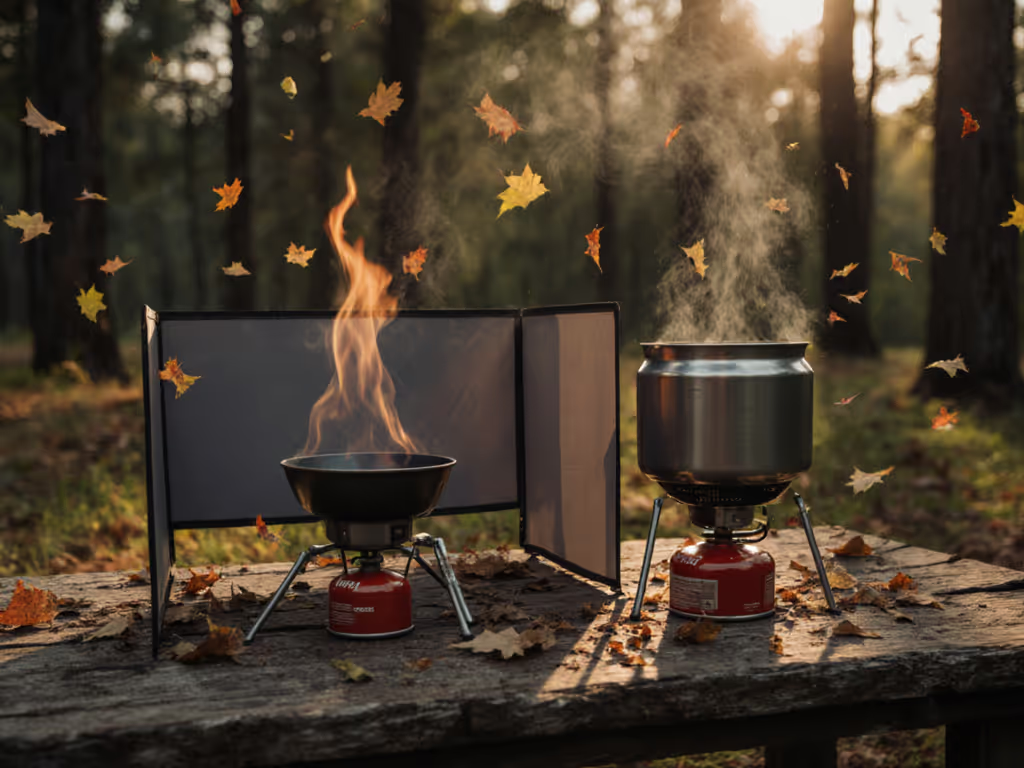
Not all stoves handle wind equally, and understanding the design differences can save you fuel, weight, and frustration. Let's break down what actually works in real conditions, not marketing claims.
Integrated Canister Stoves: The Recessed Advantage
Stoves with a recessed burner design provide crucial wind protection efficiency through geometry alone. When the flame emerges from a protected cavity, wind has less contact with the flame pattern. This simple design feature typically saves 1-2 grams per boil compared to flat-top burners in 2 mph winds. However, placement matters, because you're limited by terrain since you can't add a windscreen without risking canister overheating.
Critical maintenance tip: Keep the recessed burner clean. A single clogged jet (easily cleared with a safety pin) can disrupt the perfect flame pattern needed for wind resistance. Carry a small wire brush for the burner head and clean it after every 10-15 boils.
Remote Canister Stoves: The Windscreen Solution
This design solves the fundamental limitation of integrated canister stoves, namely safe windscreen use. For head-to-head data in gusts, see our remote vs integrated wind test. By separating the canister from the burner with a fuel line, you gain two critical advantages:
- Safe windscreen implementation without overheating risk
- Canister bath capability for cold-weather operation
During winter testing, I found that with a proper windscreen, a remote stove maintained 90% of its calm-condition efficiency even at 15 mph winds, while an unprotected stove dropped to 60%. The key is creating a complete circle with at least 1 inch of clearance between the screen and flame, and never enclosing the bottom where oxygen enters. Small details matter here.
Torque cautions: When connecting the fuel line, hand-tighten only, since over-tightening strips threads on aluminum fittings. You should be able to tighten with just your thumb and forefinger. A properly tightened connection will not leak but can be disconnected with reasonable hand pressure.
Liquid Fuel: The Cold and Wind Champion
For extreme conditions (below freezing or consistently windy exposed terrain), liquid fuel stoves offer the ultimate stove environmental performance. Unlike canisters whose pressure drops as temperature falls, liquid fuel maintains consistent pressure. For cold-weather specifics and which fuels hold pressure best, see propane vs butane vs white gas. This means you can run a strong, wind-resistant flame even when canisters would struggle to produce anything but a weak blue flame.
Field repair reality: Liquid fuel stoves require more maintenance but offer unparalleled repairability. During a high-wind incident in the Rockies, I cleared a clogged jet on a WhisperLite with just a pin, and was cooking within three minutes. Compare that to a failed canister stove with no spare parts: trip-ending frustration versus a minor delay.
A stove you can fix beats a lighter one you can't, especially when wind's howling and your dinner's waiting.
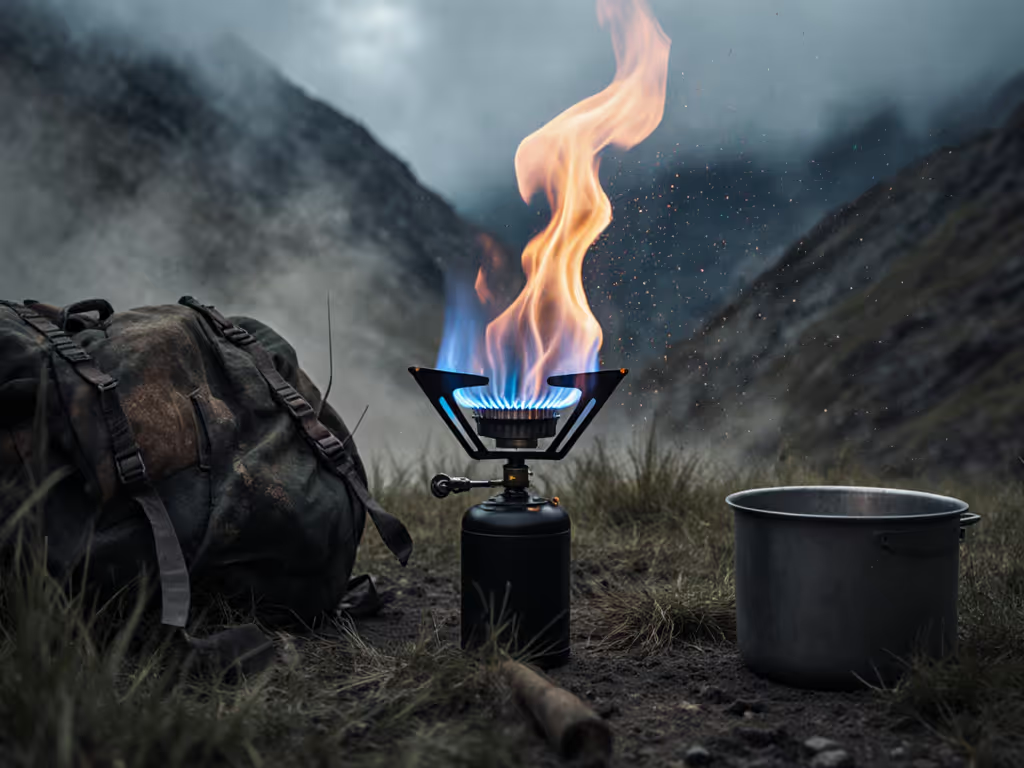
Making Wind Work for You: Practical Field Solutions
Natural Wind Management
Before you reach for gear, assess your surroundings. Look for:
- Rock formations that create natural windbreaks
- Tree clusters (never cook directly under dead branches)
- Snow banks in winter (packed snow makes an excellent wind barrier)
Position your stove so the prevailing wind comes from behind your cooking setup, not across it. I always check wind direction by wetting a finger and holding it up, simple, reliable, no batteries needed. It works.
Safe Windscreen Implementation Checklist
Windscreens dramatically improve wind protection efficiency, but require careful implementation: Get step-by-step tips in our windscreen guide.
- Use solid material (aluminum, titanium) not mesh
- Leave at least 1" clearance around burner
- Never fully enclose the bottom (oxygen must flow in)
- Keep windscreen height slightly lower than pot rims
- Never use with integrated canister stoves
- Check for fuel leaks before igniting
Waste-reduction tip: Carry a reusable windscreen cut from a byproduct can (like those used for nut butter). It folds flat, weighs next to nothing, and beats carrying disposable options.
Flame Management for Maximum Efficiency
Adjust your flame strategy based on wind:
- Gentle breezes (1-2 mph): Medium flame performs better than low or high
- Moderate wind (3-5 mph): Higher flame maintains stability but burns slightly less efficiently
- Strong wind (5+ mph): Recessed burner + windscreen + medium flame offers best balance
During testing, I found that with a properly implemented windscreen, even budget stoves performed within 0.5g/boil of premium models, proving that technique matters more than price tag. To squeeze out even more savings, pair your setup with a heat exchanger pot for measurable fuel efficiency gains. Practice pays off.
Your Wind-Ready Fuel Strategy
Understanding how wind affects your particular stove allows for accurate fuel planning (the single biggest waste reduction opportunity most backpackers miss). Instead of guessing "one canister per week," calculate based on expected conditions:
- Determine your stove's baseline fuel consumption (grams per 500ml boil in calm conditions)
- Factor in expected wind: +25% for moderate wind days, +50% for consistently windy conditions
- Add 10-15% safety margin for cold temperatures or high altitude
Waste-reduction tip: Refillable 1lb propane canisters eliminate disposable canister waste while offering better cold-weather performance than standard canisters. A simple transfer system costs less than $20 and pays for itself after three refills.
When wind resistance and fuel efficiency calculations drive your stove selection, not hype, you avoid both the frustration of failed meals and the guilt of unnecessary waste. Your actual needs dictate your gear, not marketing promises.
Action Plan for Wind-Proof Cooking
Don't wait for wind to catch you unprepared. Take these actionable steps before your next trip:
- Test your stove in wind at home, and use a fan on low setting to see how it performs
- Pack a simple windscreen made from recycled materials
- Adjust your flame strategy for expected conditions
- Calculate precise fuel needs based on wind expectations
- Carry critical repair items: wire for clearing jets, spare O-rings, and a small brush
Most importantly, understand that your stove's performance isn't fixed, it responds to how you manage wind. With the right techniques, you'll cook faster, waste less fuel, and keep more meals hot even when the weather turns. I've seen campers transformed from frustrated wind victims to confident backcountry chefs simply by understanding these dynamics.
Fix it, fuel it smart, pack out less, every trip. Your kitchen shouldn't fail when conditions do.
Related Articles