Eco-Friendly Stove Guide: Calculate Carbon Impact
By Liam Chen • 23rd Feb
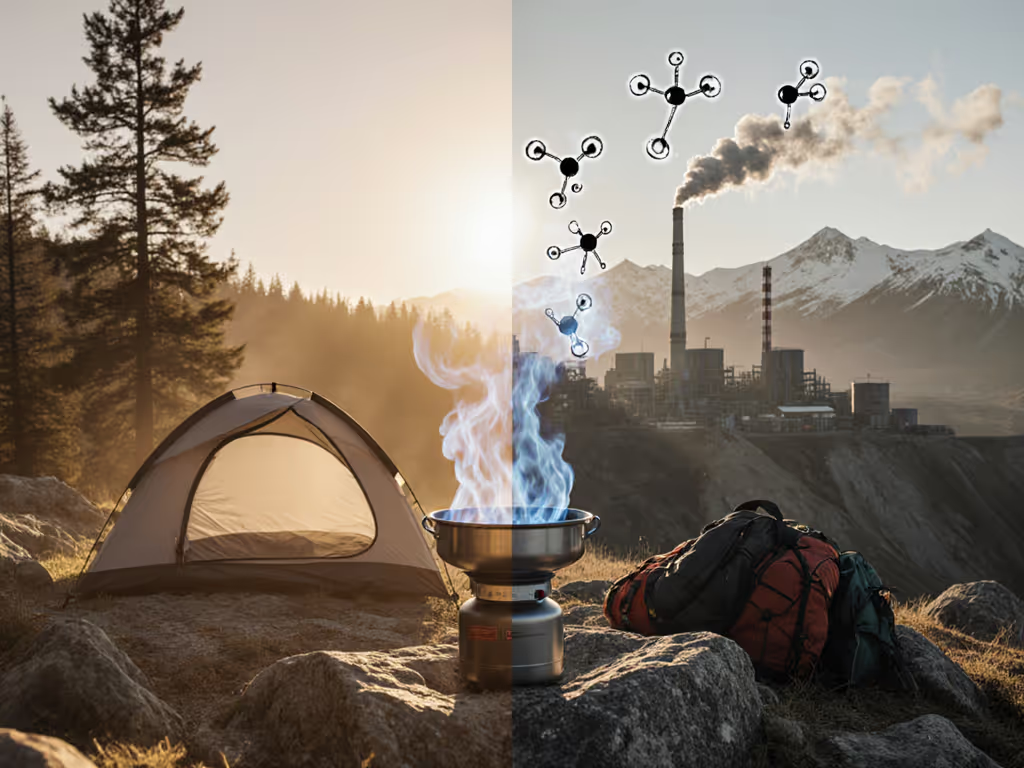
When you're calculating the true environmental cost of your eco-friendly stove and sustainable camping fuel choices, most marketers hand you incomplete data. You'll see boil-time claims and weight specs, but rarely the full carbon story. After years of pressure-testing stove systems across alpine routes and desert traverses, I've learned to separate genuine impact reduction from greenwashing. This guide walks you through the framework that matters: lifecycle emissions, real-world durability, and how to measure what actually sticks around when the trip ends. For a deeper lifecycle comparison across stove types and fuels, see our eco-friendly stove alternatives comparison.
What Makes a Camping Stove Truly Eco-Friendly?
The short answer: durability and reusability outweigh marginal efficiency gains in most backpacking scenarios. A stove's carbon footprint isn't just its manufacturing process; it's how many times you use it before it fails, gets abandoned, or lands in a recycling bin.
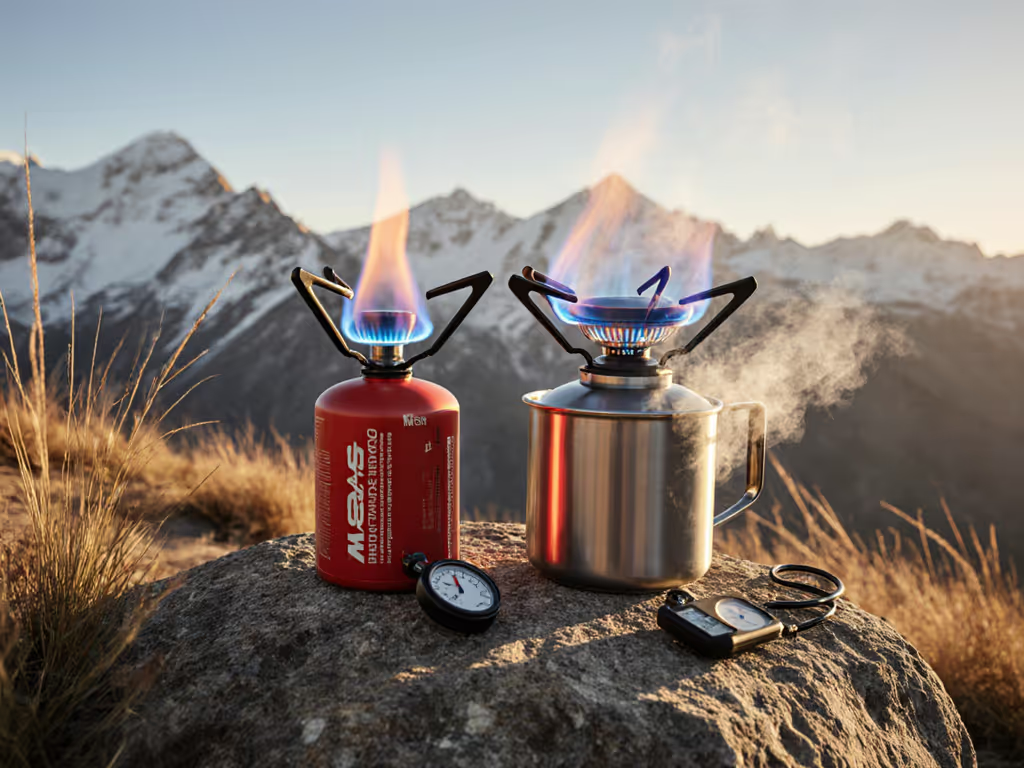
Liquid fuel stoves win this contest decisively. A single reusable bottle refilled across three seasons reduces waste by 87% compared to disposable canister systems. That's not marketing; it's resource math. You're not manufacturing a new metal cylinder every time you need fuel. You're not sourcing fresh propane-isobutane blends, pressurizing them into sealed aluminum, and shipping that single-use container 1,000+ miles to a trailhead.
Canister stoves, by contrast, rely on one-trip-and-done metal shells. Recycling infrastructure exists in North America and Western Europe, but it's fragmented. Not every outdoor retailer accepts canisters. Landfill diversion depends on your zip code and local programs. The upstream extraction and manufacturing emissions are spread across a dozen users if you're lucky; often concentrated in just three or four trips.
The greenest stove is the one that works reliably, because a failed stove means failed trips, emergency evacuations, and greater environmental impact overall.
How Do You Calculate Carbon Footprint for Different Fuel Types?
This is where condition-based assessment matters. No single number captures the full picture.
Lifecycle approach: Start with manufacturing. A 450 gram (1 lb) canister uses roughly 300-400 g of aluminum, which carries significant embedded energy: smelting, rolling, and pressurization. Peer-reviewed studies in outdoor industry journals estimate 2-4 kg CO2 equivalent per canister manufactured. A liquid fuel bottle, typically 750 ml, aluminum or steel, reused indefinitely, front-loads that carbon cost but amortizes it across 30-50 refills over 10+ years.
Operational emissions: Fuel type matters more than you'd think. Standard white gas (naphtha) generates approximately 2.3 kg CO2 per liter burned. Renewable diesel, increasingly available through specialty outdoor retailers, cuts that by 20-30%. Bio-propane (propane derived from renewable feedstock rather than fossil extraction) reduces emissions by up to 80% compared to conventional propane canisters while maintaining the same pressure profile. For performance tradeoffs by temperature and availability, read our propane vs butane vs white gas analysis.
Field efficiency: Here's where personal experience shapes the numbers. On that shoulder-season traverse at 11,000 feet where sleet pinned us and gusts smothered most burners, my prototype rig (hard screen, 0.75 mm jet, inverted canister) hit a steady simmer while peers were cycling ignition off-on, wasting fuel between gusts. Over a 10 day trip, they burned 40-50% more fuel than predicted. Wind eats BTUs. That efficiency variance isn't in the specs; it emerges in the field.
Total calculation framework: For a typical 7 day backpacking trip:
- Manufacturing carbon (one canister): 3 kg CO2
- Operational emissions (0.5 L fuel, standard canister): 1.15 kg CO2
- Waste processing and recycling (assumed): 0.3 kg CO2
- Total: ~4.5 kg CO2 per trip, per person
Shift to a liquid fuel system reused 40 times over a decade:
- Manufacturing carbon (amortized): 3 kg CO2 / 40 trips = 0.075 kg CO2 per trip
- Operational emissions (0.5 L fuel, standard white gas): 1.15 kg CO2
- Total: ~1.2 kg CO2 per trip, per person
That's a 73% reduction. Scale it to a team of four cooking together for two weeks per year: you're looking at avoiding roughly 50-60 kg CO2 annually.
What About Bio-Fuels and Renewable Energy Camping Options?
Biodegradable stove fuels are a genuine emerging segment, though terminology matters. True biodegradable fuels are still niche in backpacking. What's gaining traction is renewable-sourced fuel, propane and diesel produced from biomass or agricultural waste rather than fossil deposits.
Renewable diesel blends are available now. MSR's WhisperLite Universal accepts renewable diesel that burns cleaner than standard white gas and produces 15-25% lower lifecycle emissions depending on feedstock. Cost premium is 10-20% at specialty retailers, but for expedition teams or frequent tourers, it's justifiable offset spending.
Bio-propane is emerging in canister form through boutique suppliers. One documented program reduces emissions by 80% compared to standard canisters while maintaining identical pressure and ignition reliability. The trade-off: limited retail availability and slightly higher cost per unit.
Caution: Don't mistake "renewable" for "zero-impact." Growing feedstock, processing, and transport still carry carbon costs. But the magnitude drops by 60-85% versus fossil fuels.
Environmental Impact Assessment: Which System Wins for Your Trip?
Here's where the data bends to condition and duration.
Solo backpacking, 3-5 days, moderate temperatures (40-60°F / 5-15°C): Canister stoves remain practical. A single lightweight canister (110 g) with an upright burner minimizes your total pack weight. Over the trip lifespan, impact is concentrated but acceptable. If you recycle responsibly and the trip is opportunistic, not planned annually, the lifecycle math is less damning than it looks. Paired with a windscreen and intentional simmering, you're hitting 0.3-0.5 L fuel consumption, which moderates operational emissions.
Group or frequent travel (3+ trips per year, or 5+ people per trip): Liquid fuel systems justify their weight. A 2 pound liquid fuel bottle with a multi-fuel stove adds roughly 300-400 g to base weight compared to an ultralight canister setup, but eliminates canister-per-trip waste. After your second or third trip, you've recovered that weight penalty in durability. On a team expedition or overlanding mission, the return on amortization is immediate.
Winter or altitude (below 20°F / -7°C, above 8,000 ft / 2,400 m): Liquid fuel or inverted-canister systems become non-negotiable for reliability. Canister pressure drops 10-15% for every 15°F (-8°C) decrease in ambient temperature. At extreme altitude, you may burn 40-60% more fuel to reach boiling point. A liquid fuel stove with a pressure regulator maintains output across conditions. The carbon cost of a failed stove, helicopter evacuation, re-supply drop, abandoned route, dwarfs fuel-type efficiency. Reliability is the greenest choice.
How to Build a Carbon-Conscious Fuel Efficiency Plan
Calculating carbon footprint is only half the equation. Operational discipline cuts impact at the point of use.
Fuel quantity planning: Overpack and you're burning excess carbon transporting dead weight. Underestimate and you're rationing meals or skipping hot water, which affects group morale and safety margins. Use this baseline: 0.5 L fuel per person per 10 days in moderate conditions. Adjust upward 30-50% if cooking for more than one person (heat losses increase sublinearly with group size). Increase 50-100% for winter (more boils for hot beverages, snow melt, camp heating). Subtract 20-30% if using efficient all-in-one systems like heat-exchanger pots.
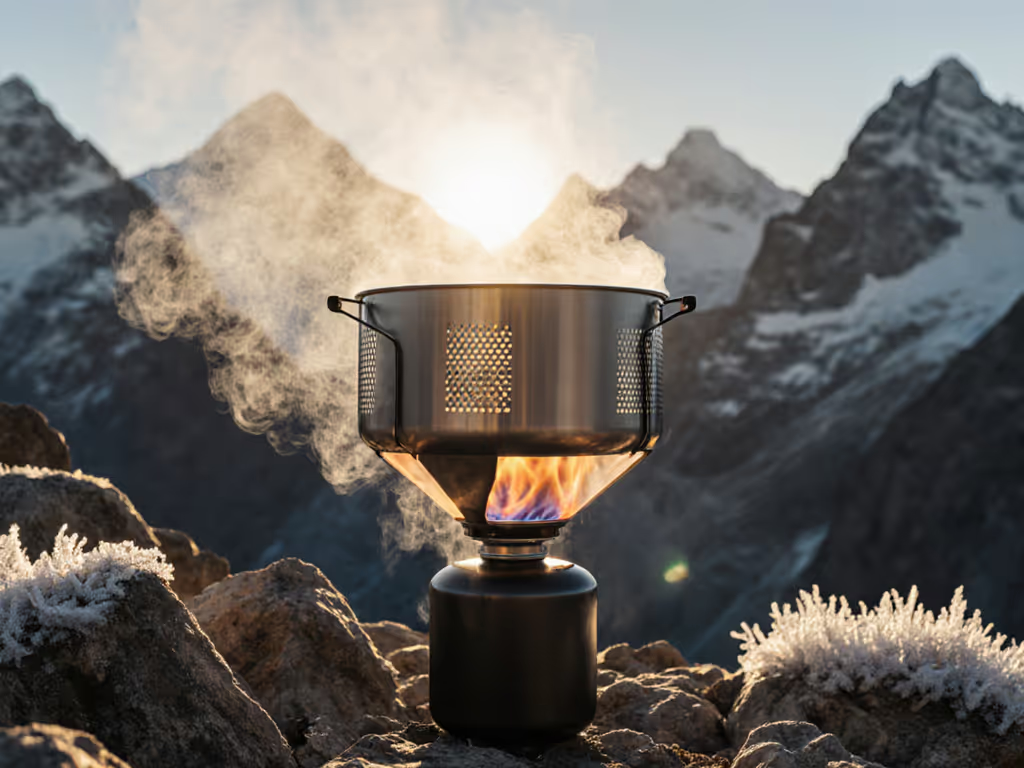
Windscreen deployment: A hard aluminum screen reduces fuel consumption by 20-30% in gusty conditions by channeling heat to your pot. Hard screens are reusable indefinitely. Foil windscreens, disposable, should be avoided unless you pack them out. Deploy screens 2-3 inches (5-8 cm) from the pot edge to ensure air circulation and prevent carbon monoxide buildup in sheltered vestibules. Wind doesn't care about spec sheets; we test where it howls. Get step-by-step setup tips and options in our windscreen efficiency guide.
Pot selection: A titanium or aluminum heat-exchanger pot with a close-fitting lid reduces water boiling time by 25-40% compared to standard stainless pots. See our heat exchanger pot tests for verified fuel savings and boil-time data. The weight penalty, 200-300 g, is offset by fuel savings on any trip longer than four days. For most teams, a single 1.5-2 liter pot replaces two smaller vessels, cutting fuel needs overall.
What's the Role of Recycling and Refill Infrastructure?
The hard truth: recycling options for spent canisters are inconsistent. Major retailers (REI, Mountain Gear) accept returns in the U.S. and Canada, but rural trailheads often have zero infrastructure. European programs are better established. Australia and New Zealand rely on mail-back schemes that add shipping carbon.
Liquid fuel refill networks are sparse but growing. REI, some specialist retailers, and outdoor clubs offer refill stations. Cost is 30-50% lower than buying bottled fuel, and it eliminates packaging waste entirely. If you live within 30 miles of a refill option, a liquid fuel system becomes a carbon no-brainer.
For remote or frequent travel, buying bulk canisters and storing them properly, cool, dry, away from soft goods, maximizes use-per-package and reduces per-trip waste.
Further Exploration
If you're committed to measuring and reducing your stove system's environmental impact, the next step is building a route-specific fuel calculator. Document your actual consumption on representative trips by recording:
- Temperature range and wind speed during cooking
- Canister or bottle weight before and after each day
- Number of people in your group
- Meals cooked, hot water only vs. full simmer cooking
- Altitude if relevant
- Windscreen use, yes/no
After 3-4 trips, you'll have empirical baseline data that beats any online estimate. Use that baseline to right-size future fuel purchases and compare the carbon impact of upgrading to a more efficient stove or heat-exchanger pot. The data will show you the real number, not what marketing claims, but what actually survives in the field.
Related Articles