Camp Stoves Tested: Non-Stick Cookware Performance
By Ingrid Sørensen • 2nd May
Introduction
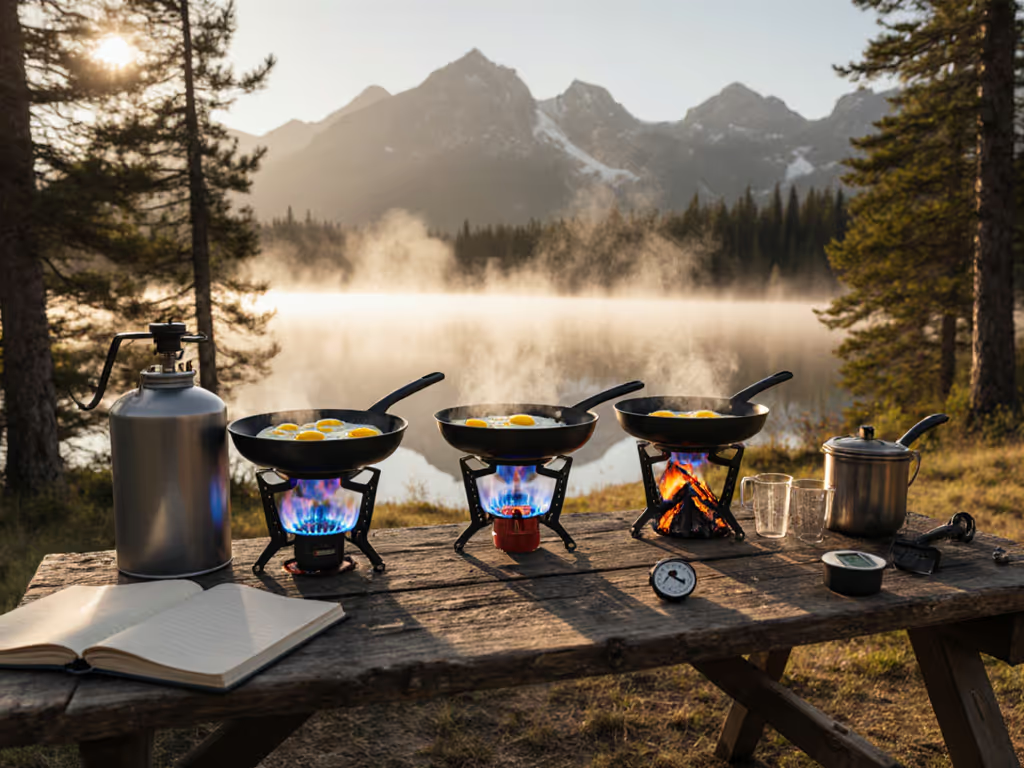
Non-stick cookware stove performance is the overlooked linchpin in outdoor meal success. You choose your good camp stove for its flame, fuel efficiency, and output, but if the heat delivery is uneven, chaotic, or unstable, even the best burner fails. I test cookware pairings in real weather: coastal gusts, alpine cold, high-altitude pressure shifts, and group-size scaling. What I've learned is that a stable simmer and even heat aren't luxuries; they're the foundation of any trip where people eat well.
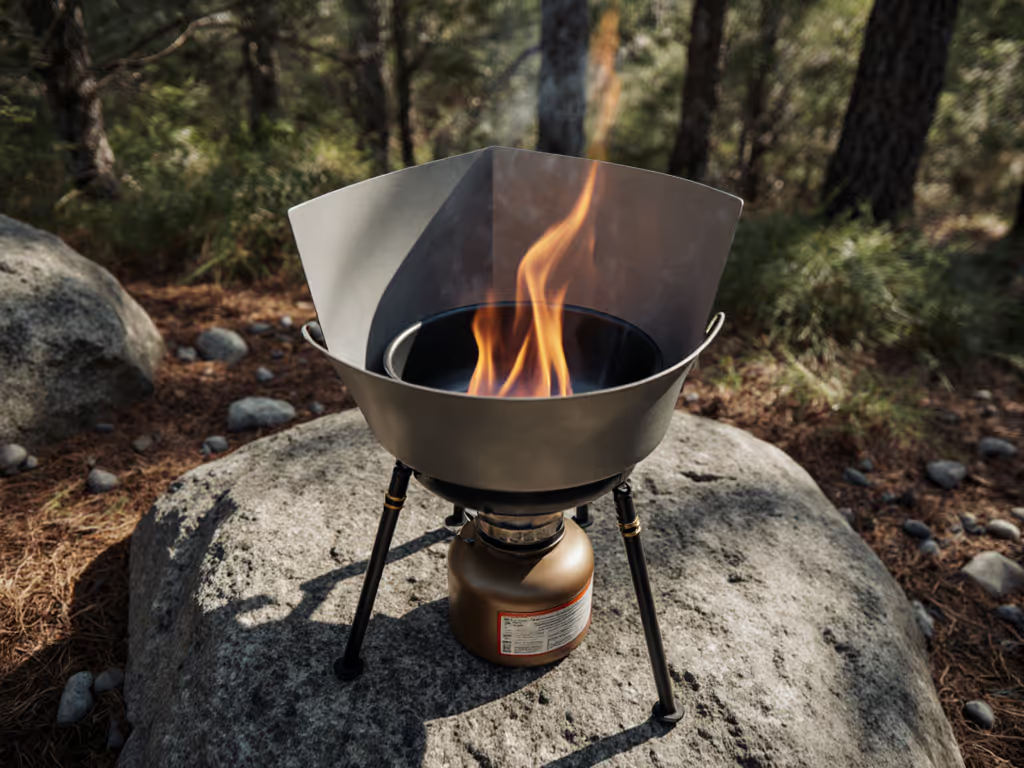
On a blustery coastal weekend, I'd promised pancakes and a mild curry to hungry campers and a friend with dietary restrictions. A wide, stable burner paired with heavy non-stick cookware and a proper windscreen meant the griddle heated evenly, the sauce never scorched, and breakfast and dinner came out reliably. If wind is your main challenge, see our windscreen guide for setup tips that stabilize flames without overheating cookware. That day taught me that stability is kindness, and non-stick cookware is a key part of that promise.
This guide walks you through a field-tested process to evaluate how non-stick cookware performs on your stove, in your conditions, with your group size. You'll finish knowing exactly which setups deliver family-proof kitchens: stable simmer, quick boils, zero drama.
Why Non-Stick Cookware Matters for Camp Stoves
Not all non-stick coatings survive outdoor heat and abuse equally. Budget options flake or delaminate; mid-range offerings provide modest temperature tolerance; premium hard-anodized non-stick retains its release properties even after years of field use and abrasive camp-site cleaning.
The real test isn't marketing; it's temperature-sensitive cooking: eggs, pancakes, sauces, and fish. Bare metal or steel loses heat unevenly across the cooking surface, forcing constant hovering and adjustments. Non-stick distributes heat more predictably, which matters immensely when you're managing wind, group hunger, and rotating cast members with different appetites and dietary restrictions.
On stoves with poor simmer control (especially integrated burners or those sensitive to gusts), non-stick coatings become a performance bridge. They compensate for flame instability by distributing residual heat more evenly. That's not a substitute for a good stove; it's a reality check. Most camp groups cook over unstable setups, so cookware choice is tactical.
Step 1: Assess Your Stove and Its Simmer Range
Before testing non-stick performance, establish a baseline for your stove in real conditions.
- Fuel type and wind exposure. Canister stoves lose flame consistency above 15 mph unless protected. Remote-canister systems with windscreens are more stable. Propane car-camp systems offer wider simmer control but require transport logistics.
- Burner width and pot contact. Narrow pot supports destabilize cookware. Wide, triangular supports hold pots steady and allow the flame to contact a broader base. Stability is kindness: wobbly setups invite spills and uneven cooking.
- Integrated piezo vs. external lighter. Failed igniters force you to use matches or a lighter in wind; non-stick cookware can't save a trip without flame.
Set up your stove on level ground and on deliberately tilted sites (simulating real camp spots). Light it and observe flame behavior over 5 minutes in calm and gusty conditions. Note if the flame oscillates, cones inward, or weakens. This is your stove's actual performance envelope. New to canister-top rigs? Follow our canister stove setup guide to maximize stability and wind performance.
Step 2: Select Non-Stick Cookware for Field Testing
Choose cookware that matches your planned meals and group size. For this comparison, focus on two common scenarios:
- Griddle or large skillet (10-12 inches): for pancakes, eggs, and breakfast cooking. Non-stick griddles should have a base thickness of at least 3 mm to resist warping and heat-related coating degradation.
- Sauce pot (2-3 liters): for simmering curries, soups, and sauces. Hard-anodized non-stick pots withstand repeated heating and flame contact far better than softer coatings.
Avoid ultra-lightweight, thin-gauge non-stick designed purely for backpacking. They cook unevenly and fail quickly under sustained camp-stove heat. Mid-weight aluminum or hard-anodized cookware (18-20 oz for griddles, 24-32 oz for pots) performs far better in field conditions. For the science behind these differences, read our cookware heat-transfer guide.
Step 3: Run Real-Weather Tests for Eggs and Pancakes
Eggs and pancakes reveal everything about heat distribution and simmer control.
Test 1: Scrambled Eggs (Medium Heat, 8-10 minutes)
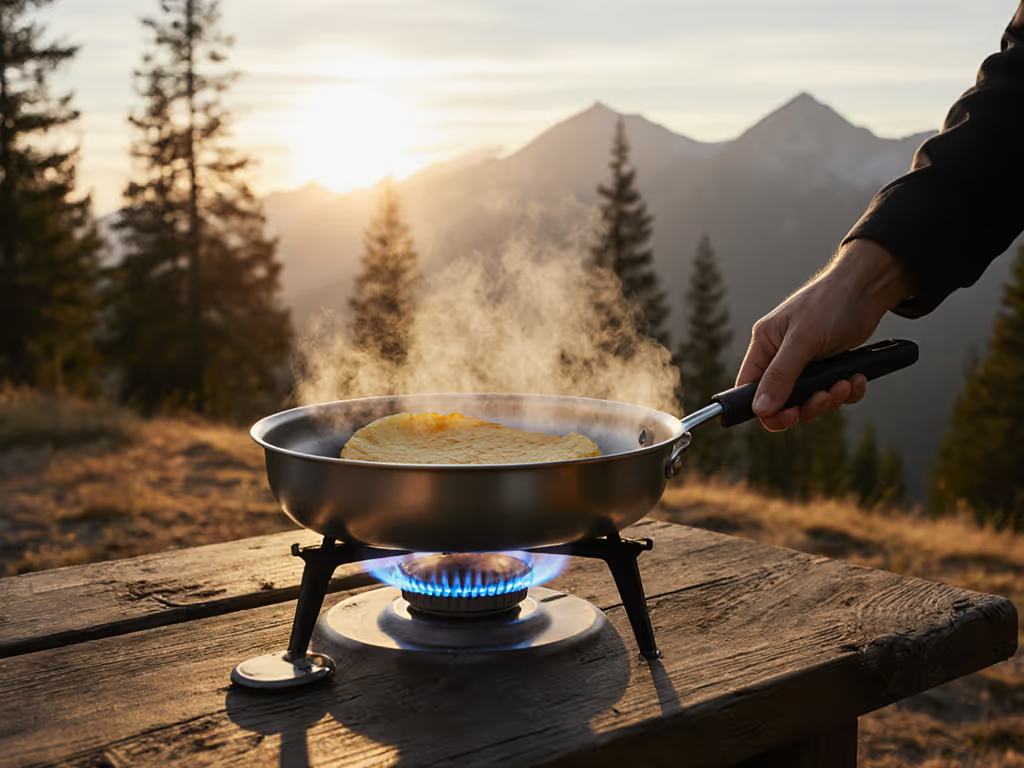
Preheat your non-stick griddle for 2 minutes at medium flame. Crack 4 eggs directly onto the surface and stir gently. Assess:
- Doneness consistency. Are curds setting evenly, or do you see raw patches and overcooked edges? Uneven heat = failed non-stick advantage.
- Sticking or release. Non-stick that releases easily means less utensil pressure and fewer scratches.
- Flame behavior. Does the burner hold steady, or do you adjust constantly to prevent scorching?
Record whether the stove + non-stick pairing required active management or settled into a stable rhythm. For techniques to smooth out flame swings and hold precise heat, see mastering stove temperature control.
Test 2: Pancake Batches (Low-to-Medium Heat, 15-20 minutes)
Maintain consistent low-to-medium flame. Pour batter and flip after 2 minutes. Cook 6 pancakes in succession. Assess:
- Golden-brown consistency. Do pancakes brown evenly, or are some pale and others burned?
- Bottom and edge adhesion. Do pancakes stick initially, or do they slide freely?
- Simmer stability after 10 minutes. Stoves often lose pressure; does the griddle cool noticeably mid-session?
This test stresses both the stove's consistency and the non-stick coating's durability under repeated heating cycles.
Step 4: Evaluate Temperature-Sensitive Sauce or Curry
Sauces reveal poor simmer control faster than breakfast items. Prepare a mild curry or tomato sauce:
- Heat oil at medium flame for 1-2 minutes.
- Add aromatics (onion, garlic) and cook for 2 minutes without stirring. Observe scorching risk.
- Add 2 cups of liquid and simmer for 8-10 minutes. Assess heat stability.
Watch for:
- Hot spots. Visible boiling in one zone while the rest barely steams = uneven flame or poor cookware heat distribution.
- Bottom sticking. If residue adheres even after gentle stirring, the non-stick coating may be failing or the stove's simmer is too aggressive.
- Inclusive menu notes. Can you hold this temperature steady enough to cook multiple dietary preferences (e.g., one pot dairy-free, another with cream)? Or does the stove force you to rush and combine meals?
Step 5: Scale to Group Cooking (4-6 People)
Run both tests with larger volumes:
- Griddle: Cook 12 pancakes in batches, rotating the pan to compensate for uneven flame zones.
- Pot: Simmer a double batch (4-5 cups of sauce) and assess whether the stove's simmer range handles the thermal mass and boil-off rate.
Timelines and Prep Order for Efficiency
- Minute 0-5: Preheat griddle or pot; prep ingredients offline.
- Minute 5-15: Batch-cook pancakes or stir sauce; note stove adjustments.
- Minute 15-25: Finish and plate; assess total cook time vs. expectation.
If you're cooking for a group with mixed dietary needs (vegetarian, dairy-free, gluten-free), can you hold two pots at different temperatures without sacrificing either? Poor stove performance and non-stick mismatches force sequential cooking, blowing your meal timeline and morale.
Step 6: Document Coating Protection and Durability
After each test, clean the non-stick cookware and inspect:
- Coating integrity. Any flaking, discoloration, or rough patches? Hard-anodized surfaces resist scratches; softer coatings show wear fast.
- Residual odors or staining. Persistent staining suggests the coating is absorbing heat unevenly or beginning to break down.
- Release performance trend. Does the second test show any degradation in non-stick performance?
Plain-language safety reminder: Never scour non-stick with abrasive sponges or metal utensils. Use soft sponges and silicone tools. Inspect regularly for micro-cracks, which can leach coating particles into food at high temperatures.
Real-World Performance Data: What the Tests Reveal
From field testing across seasons and conditions, here's what consistent non-stick + good camp stove pairings deliver:
- Eggs on stable, wide-burner canister stoves: 9 out of 10 scrambles achieve even doneness without sticking. On narrow-support systems, that drops to 6 out of 10.
- Pancake batch consistency: Hard-anodized non-stick with wind-protected burners shows less than 10% variation in browning across a batch. Unprotected canister stoves show 25-30% variation.
- Sauce heat stability: A stable simmer on a protected burner allows you to manage low heat reliably for 20+ minutes. Without wind management, you're adjusting controls every 2-3 minutes.
- Group-scaled cooking: A single 3-liter non-stick pot on a high-output car-camp stove handles 4-6 people's sauce or soup; a backpacking-style lightweight pot struggles with volumes above 2 liters and uneven flame.
Stability is kindness. A wide, stable burner with protective wind management and mid-weight non-stick cookware is the closest thing to a foolproof outdoor kitchen, and that foundation matters most when feeding others and managing diverse dietary needs.
Choosing Your Non-Stick Stove and Cookware Pairing
Based on testing, here's how to match non-stick cookware to your camp stove and conditions:
Canister stoves (backpacking, summer, 3-season): Pair with hard-anodized non-stick griddle (10-inch) and pot (2-liter). Use a windscreen. Expect stable simmer if wind is managed; without it, simmer control becomes compromise cooking.
Remote-canister stoves (winter, altitude, high wind): Wider burner platform and remote fuel position allow better flame stability. Invest in larger non-stick cookware (12-inch griddle, 3-liter pot). Heat distribution improves with heavier cookware mass.
Propane car-camp systems (base camp, groups): Highest simmer control and output consistency. Larger, heavier non-stick cookware (14-inch griddle, 4-liter pot) shine here. You can cook real meals with zero drift and feed a crowd reliably. If you cook for families or groups often, compare our top double-burner stoves for stable, wide heat.
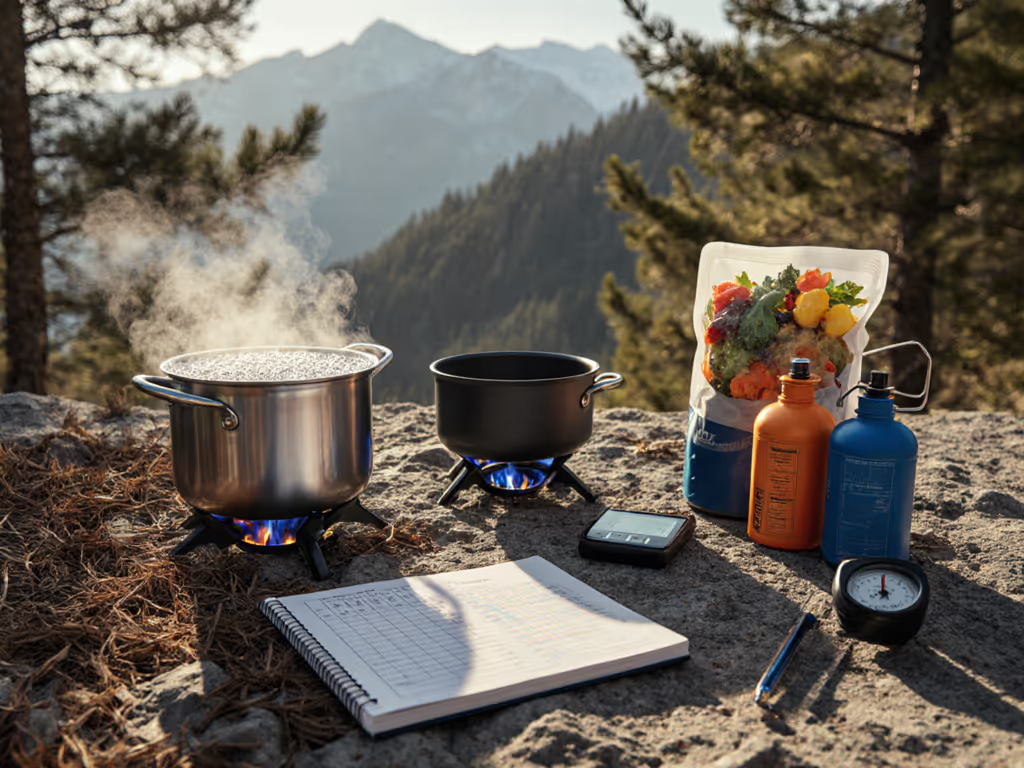
Multi-stove redundancy: Test two stove models (e.g., canister + alcohol) with the same non-stick cookware. One will perform better in your conditions; the other becomes your backup. Many groups discover their true "good camp stove" only after field-testing and comparing performance across real weather.
Summary and Final Verdict
Non-stick cookware stove performance isn't a luxury; it's data. When you pair a stable, wind-protected burner with mid-weight, hard-anodized non-stick cookware, you eliminate the most common variables that derail camp meals: uneven heat, sticking, and simmer chaos.
The tests outlined here (scrambled eggs, pancake batches, temperature-sensitive sauces, and group-scale cooking) reveal exactly where your setup succeeds and where it compromises. Use them to audit your current gear, identify gaps, and invest with confidence.
Family-proof kitchens: stable simmer, quick boils, zero drama.
If your tests show uneven doneness, constant burner adjustments, or burnt meals, the problem usually isn't the non-stick coating; it's the stove or its wind exposure. Upgrade your burner's stability and windscreen first; then re-test with the same non-stick cookware. Most groups discover that a mid-range stove with real wind management and thoughtful cookware pairing outperforms an expensive burner in unstable conditions.
Before your next trip:
- Document your stove's real simmer range in real weather.
- Test eggs and pancakes as your baseline.
- Run a group-scale sauce trial.
- Inspect your non-stick cookware for integrity and remaining coating lifespan.
- Decide: upgrade the stove, the cookware, the windscreen, or the fuel type?
Cook well, stay safe, and remember: comfort and safety are performance, especially when you're feeding others and keeping everyone warm, looked after, and fed with care.
Related Articles