Best Festival Camping Stoves: Compact & Quiet
By Amina Al-Khalil • 20th Apr
Introduction
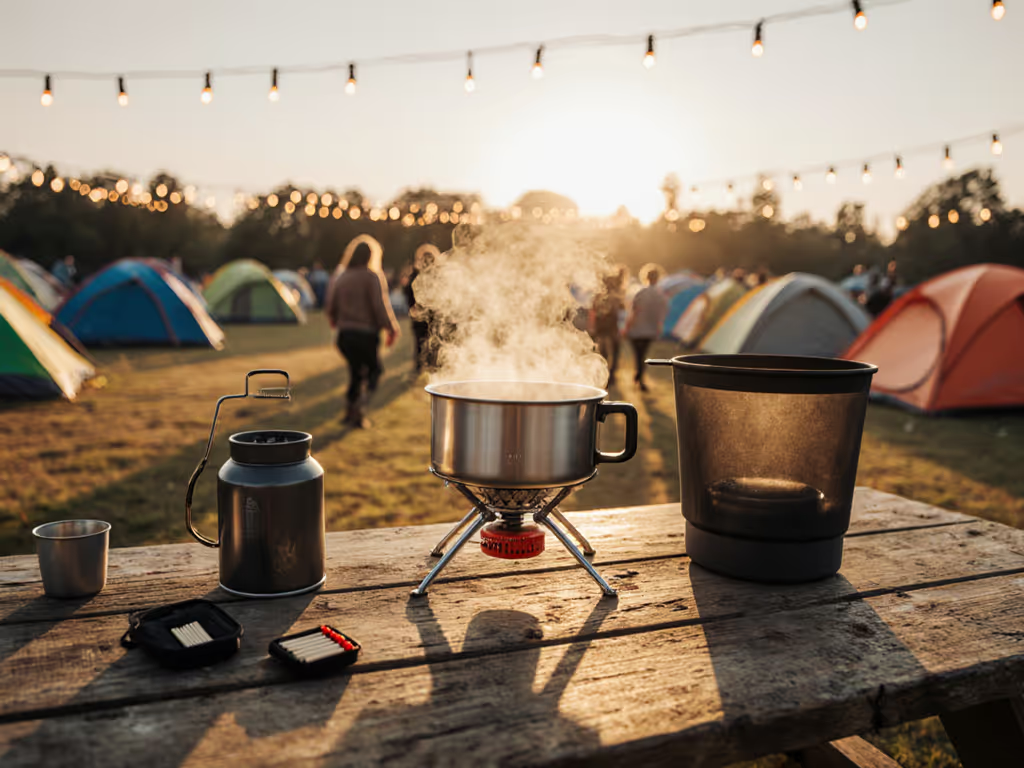
When you're cooking for a group at a festival (whether a backcountry music event, a family gathering, or a week-long car-camping adventure), your camp stove has one job: work reliably in crowded quarters without burning down the tent next door. But "compact and quiet" isn't just about footprint and decibels. It's about a stove you can actually maintain mid-trip if something goes wrong.
I learned this lesson during a canyon downpour years ago. Our kitchen was gritty, the stove sputtered mid-dinner, and couscous wasn't happening. I laid out a bandana, stripped the burner, and cleared the jet with a bit of wire, and ten minutes later, we ate. The stove wasn't the fanciest; it was fixable. That's the philosophy that matters at festivals: a stove you can fix beats a lighter one you can't.
This guide reviews the best compact, quiet festival stoves tested in real conditions, with emphasis on serviceability, fuel efficiency, and low-impact camping. We'll compare canister systems, integrated stove-and-pot combos, liquid-fuel hybrids, and refillable options so you can pick the right rig for your crowd size, venue, and season.
What Makes a Festival Stove Different?
A festival portable cooking stove faces pressures that backcountry soloists don't. You're likely:
- Cooking for 2-8 people in a compact, crowded campsite footprint
- Managing noise concerns (shared campgrounds, quiet hours)
- Dealing with variable ground (gravel, mulch, hard-packed dirt) that destabilizes narrow pot supports
- Running shorter, predictable trips (24-72 hours) with known fuel needs
- Prioritizing ease of lighting in social settings (no fussy priming or pump failures)
- Wanting a setup you can pack and unpack without ceremony
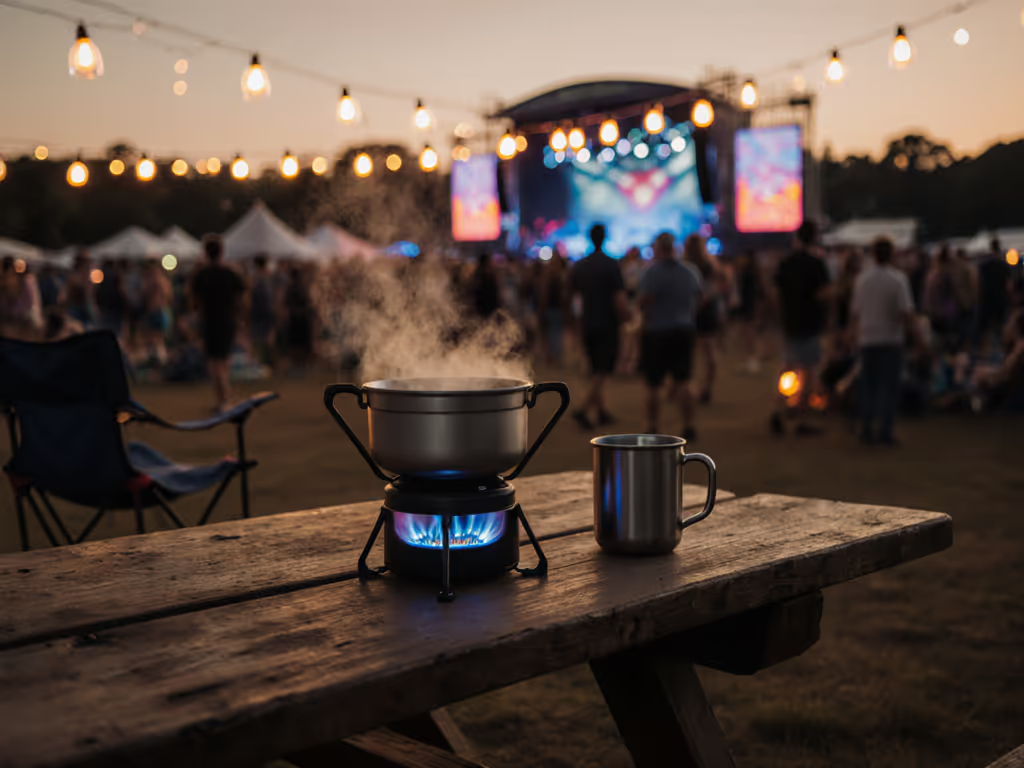
Festival venues often have fire restrictions or specific regulations. Check area rules and shutoff-valve requirements in our stove regulations guide. A quiet stove for festivals with a low profile and no roaring flame draws less attention and works with portable windscreens without creating a fire hazard. Canister stoves with piezo igniters, integrated systems with stable bases, and compact liquid-fuel cartridges all fit this profile, but each has trade-offs in serviceability, wind performance, and cost.
Multi-Product Review: Festival Stove Types Compared
Canister Stoves: Lightweight and Compact
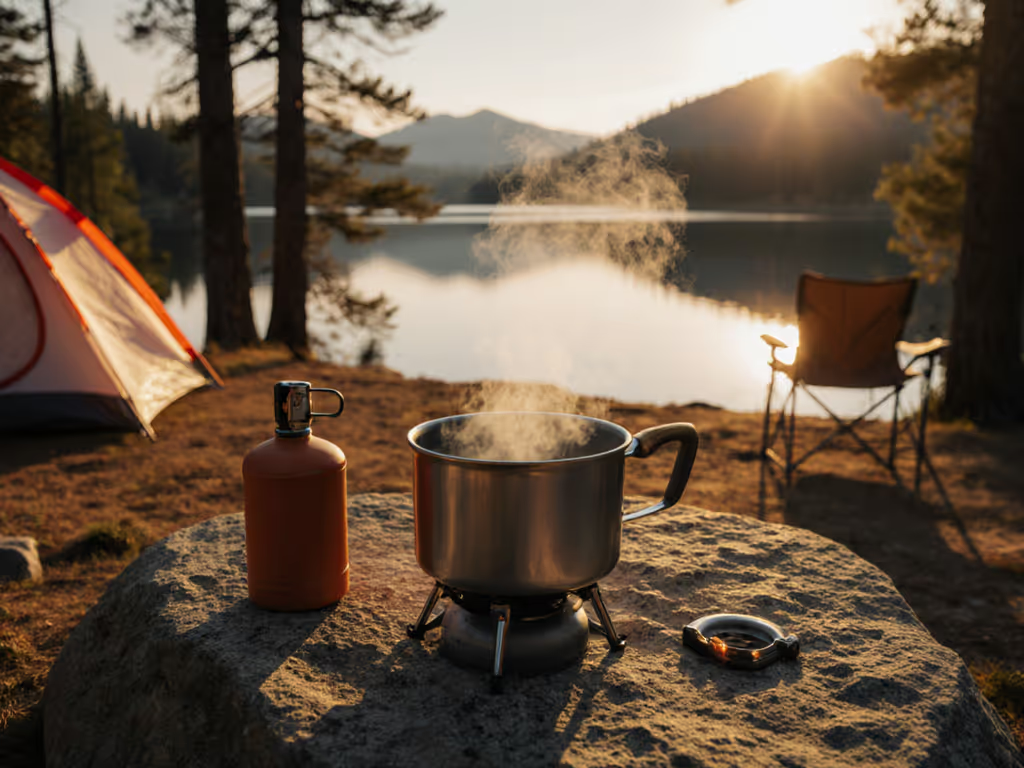
Why They're Festival Favorites: Canister stoves are the default for festivals. They're lightweight, compact, and ignite with a button press. The MSR PocketRocket 2 excels in windy conditions with its low center of gravity and stable burner head. The Campingaz Camp Bistro 2 pairs automatic ignition with single-burner simplicity and runs on easy-to-find gas canisters.
Performance Data: Canister stoves typically boil 1 liter of water in 3-5 minutes depending on wind and altitude. The MSR PocketRocket 2 maintains pressure stability in breezy conditions, making it a consistent performer across variable festival terrain. The Campingaz Camp Bistro 2 trades wind resistance for affordability and minimal weight (a solid choice for protected camping areas).
Serviceability Notes: The strength of canister stoves is simplicity: fewer parts mean fewer failure points. A jet tool clears clogged fuel jets. Piezo igniters can fail, but most models have a backup striker wheel or lighter option. Carry a jet tool and a small bottle of stove fuel (white gas or naphtha) to prime a clogged jet if needed. The drawback: most canister stoves have non-serviceable regulators, so a failed canister-to-stove interface is a trip-ender.
Waste & Refillable Reality: Standard aluminum canisters are single-use in most regions (a pain for Leave No Trace ethics). However, refillable 1-pound propane cylinders work with adapter cartridges on select models. If your festival trip is 48 hours and you're cooking for 2-3 people, one refillable canister replaces 3-4 disposables. This waste-reduction math is compelling for regular festival-goers.
Integrated Stove-Pot Systems: Stable and All-in-One
Why They're Winning for Groups: Integrated systems like the Jetboil Flash Cooking System pair a stove directly to a heat-exchanger pot, eliminating the instability of a freestanding burner. For crowded campsite cooking, this matters: no tipping, no spills, more controlled flame output.
Performance Data: The Jetboil Flash boils 1 liter of water in approximately 2 minutes, among the fastest tested. The integrated design minimizes heat loss and wind interference. However, heat-exchanger pots excel at boiling and heating but struggle with sautéing or frying; the flat base and thin walls can scorch food or distribute heat unevenly. Real-world testing shows integrated systems are ideal for breakfast tea, instant meals, and rehydrating freeze-dried food, not gourmet simmering.
Serviceability Notes: Integrated systems are harder to repair. If the burner clogs, you're disassembling a tight interface. If the pot develops a leak, replacement costs are steep and waste is high. However, piezo igniters on Jetboil Flash are reliable, and replacement burner heads are available aftermarket. Parts availability is better than it was five years ago, but serviceable repair-first models (see next section) still win on durability and cost-of-ownership.
Fuel Efficiency: Integrated pots are highly efficient: less wasted heat, less fuel burned to reach target temperature. For a 72-hour festival with 4-6 people and 3-4 meals per day, a Jetboil system burns roughly 1.5-2 refillable canisters, whereas freestanding canister stoves might burn 2-2.5. The math rewards compact festivals.
Liquid-Fuel and Hybrid Systems: The Repair-Friendly Choice
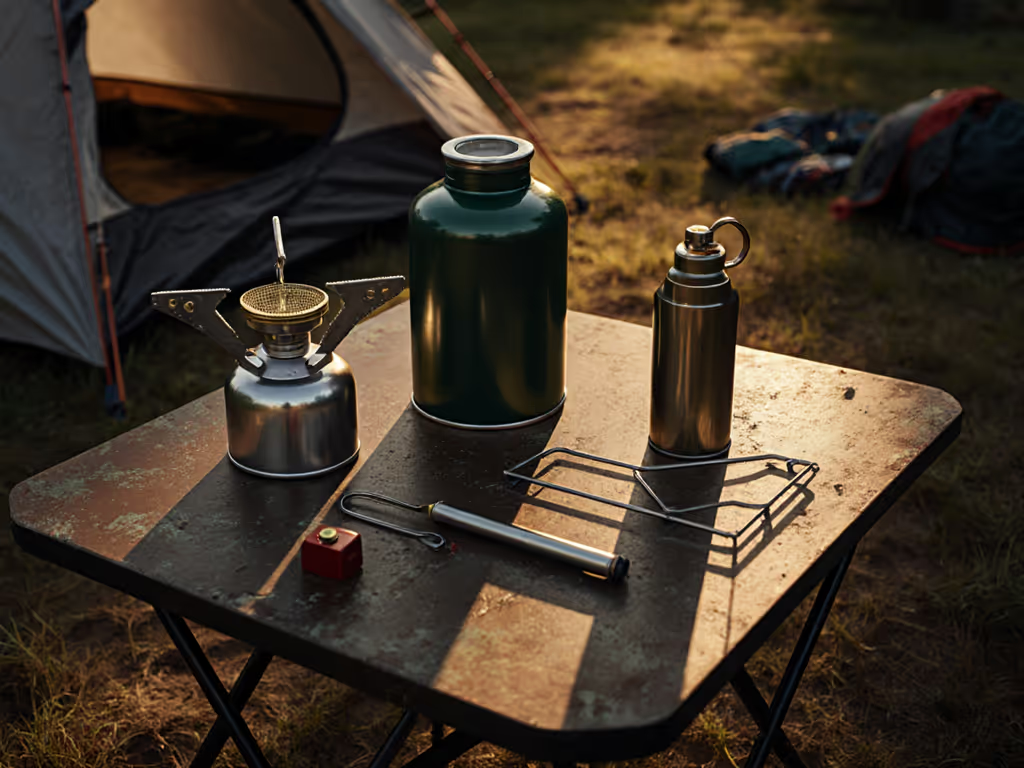
Why They Matter for Serviceability: White-gas and multi-fuel stoves (like the Primus Reactor and vintage MSR WhisperLite models) offer full, field-replaceable components: pump seals, fuel lines, burner jets, and nozzles. If something clogs or fails, a spare part kit and basic tools fix it. The Reactor's high-performance design excels in extreme conditions, but liquid-fuel stoves are equally valuable for festival reliability and long-term cost savings.
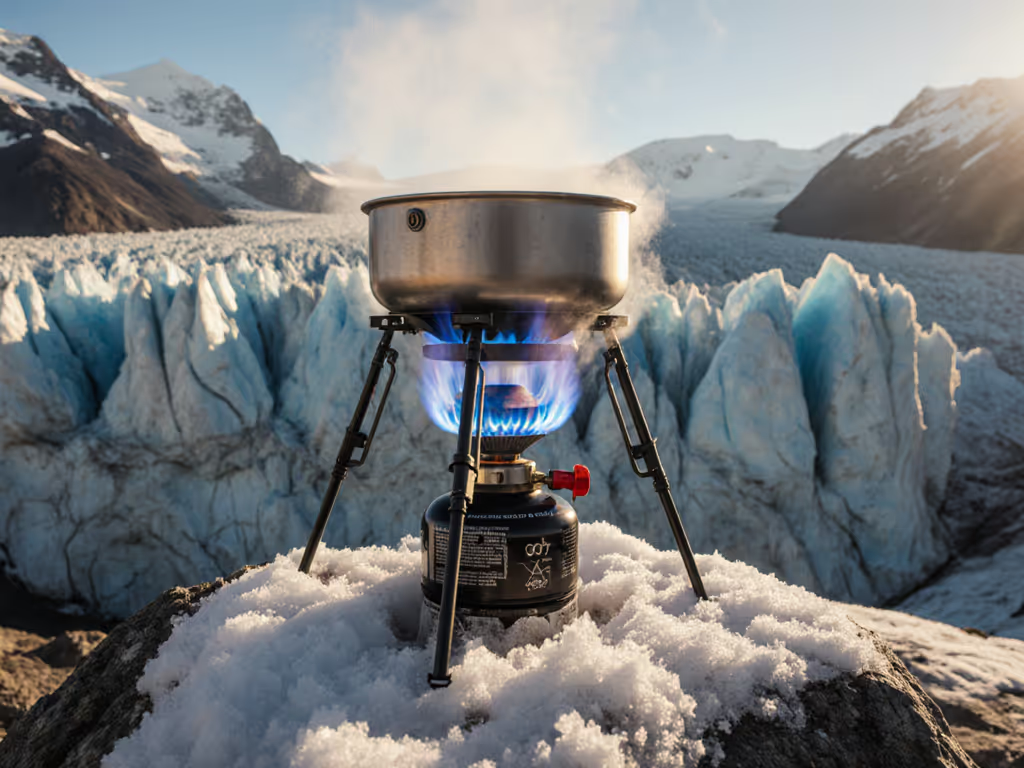
Performance Data: Liquid-fuel stoves generate 10,000-15,000 BTU per burner. They're not as fast as integrated canister systems, but they're stable, predictable, and run in cold weather and high altitude without the pressure drop canister stoves suffer. A priming ritual (heating the fuel cup with a match or lighter) is required, but once running, a liquid-fuel stove is nearly impossible to stall.
Serviceability Deep Dive:
- Pump O-rings: Replace annually or after 50+ days of use. A spare O-ring kit costs $5-10 and takes five minutes to swap.
- Fuel jets: A small parts kit ($15-20) includes replacement jets, nozzles, and a priming needle. Carry a jet tool to clear blockages mid-trip.
- Fuel line: Silicone or reinforced rubber fuel lines last 5-10 years. Replacement lines are $10-15 and are swappable in the field without special tools.
This is where the philosophy shines: fix it, fuel it smart, pack out less, every trip. A liquid-fuel system that fails gets repaired in camp; an integrated system often gets abandoned at home after one failed trip.
Waste Advantage: Liquid fuel comes in refillable bottles. A 1-liter fuel bottle ($15-30) is reusable for years. Bring it to festivals, refill it at home, and never buy a disposable canister. Over 10 trips, the waste reduction is substantial and the cost-per-trip drops significantly.
Compact Multi-Burner Stoves: For Larger Groups
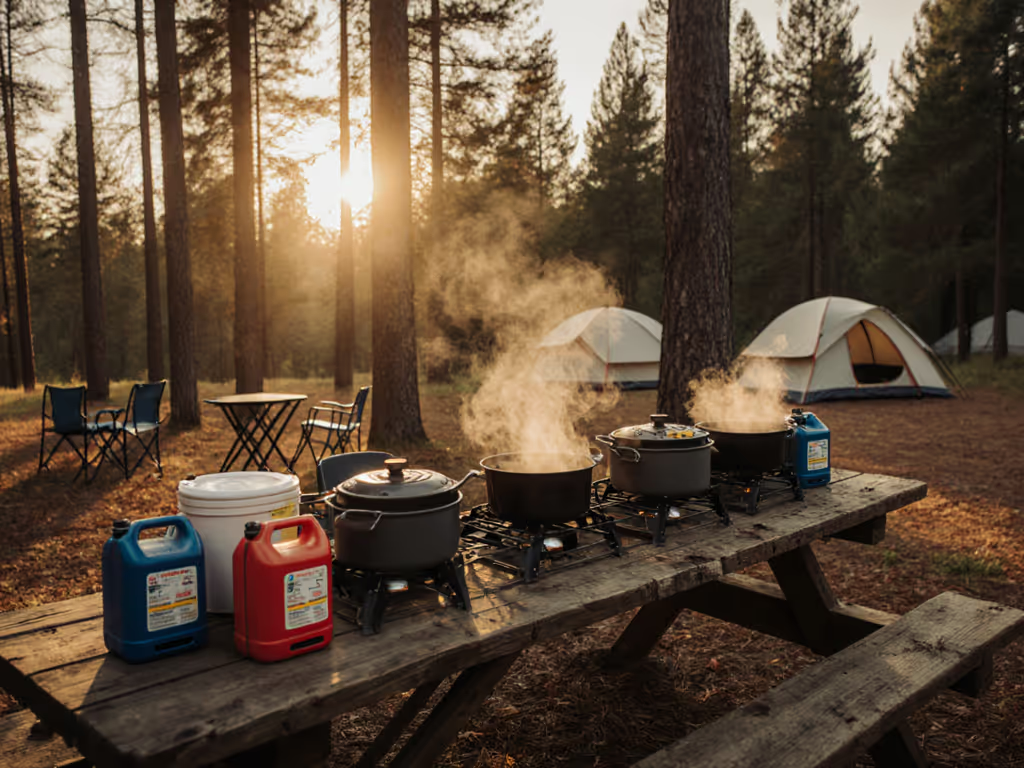
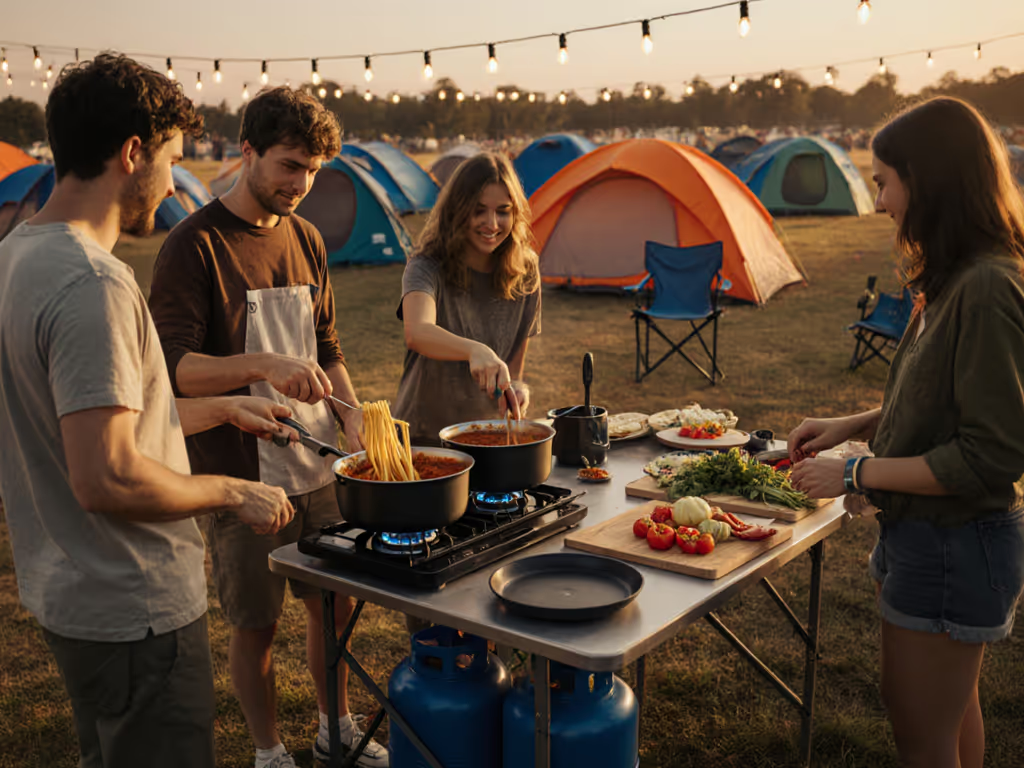
Why They're Underrated for Festivals: The Outwell Jimbu Double Burner Stove and Camp Chef Everest 2x scale the cooking footprint for groups of 4-8 without dramatically increasing weight or setup time. For top-rated options and stability metrics, see our double-burner group stove guide. Both models are tested extensively for wind performance and stability on variable terrain.
Performance Data: Double-burner stoves typically weigh 2-3 pounds, fit in a compact case, and deploy in under two minutes. The Camp Chef Everest 2x offers simultaneous boiling and simmering (a luxury for groups). Each burner runs 8,000-12,000 BTU, allowing one cook to boil pasta while another simmers sauce.
Crowd Dynamics: At festivals with multiple tents sharing meals, simultaneous cooking cuts total preparation time. Cooking efficiency is the difference between eating at 7 PM and 9 PM, which affects morale, cleanup, and group harmony. For a 48-hour festival with 4-5 people preparing three meals daily, a double-burner is a morale multiplier.
Serviceability: Double-burner canister stoves are still canister-based, so serviceability follows the single-burner canister model. However, some models (notably Camp Chef rigs) use standard camping-stove valve cartridges, which are replaceable. Check the manual before purchasing to confirm parts availability.
Noise, Wind, and Stability: The Festival Reality Check
Quiet Operation
Canister stoves are inherently quieter than liquid-fuel rigs because there's no pump or priming flame. Festival organizers often appreciate silent burners; a hissing stove draws less attention than a roaring one. However, quiet is relative: even a PocketRocket 2 hisses audibly in a 20-person campground. For model-by-model decibel data and quieter stove picks, see our noise impact tests. If noise is critical (e.g., in a shared tent kitchen during quiet hours), choose integrated systems with low flame and avoid the high roar of full-power propane car-camp stoves.
Wind Management
Wind kills performance. The MSR PocketRocket 2's wind resistance and Camp Chef's integrated windscreen consistently rank high in field testing. A portable windscreen ($15-25) boosts efficiency by 15-25% in breezy conditions but must be used carefully with canister stoves. Get setup tips and safe options in our windscreen guide. Never fully enclose a canister in aluminum or tin, as trapped heat risks rupture. Most festival sites are relatively sheltered, but a folding aluminum or fabric windscreen with open sides is safe and effective.
Stable Bases on Variable Ground
Festivals happen on gravel, mulch, and patchy grass. Narrow pot supports tip easily. Wide, splayed burner heads (Jetboil) or stable tripod bases (Camp Chef) prevent spills. If you're bringing a lightweight canister stove to a festival, plan to set it on a level rock or small platform (a thin camping mat or fire-resistant plywood square ($5-10) adds safety and stability).
Actionable Buying Checklist
Step 1: Define Your Group Size and Trip Length
- Solo or 2-3 people, 24-48 hours: Canister stove (MSR PocketRocket 2 or Campingaz Camp Bistro 2) + refillable propane adapter.
- 4-5 people, 48-72 hours: Integrated stove system (Jetboil Flash) or compact double-burner (Camp Chef Everest 2x).
- 6+ people, multi-day festival: Double-burner with refillable propane or liquid-fuel hybrid system.
Step 2: Assess Wind and Terrain
- Exposed, windy sites: Prioritize low-profile stoves with integrated pots or wide, stable tripod bases.
- Sheltered, soft ground: Any compact model works; add a stability pad or rock.
Step 3: Match to Your Cooking Needs
- Boiling water only (tea, instant meals): Any canister or integrated system.
- Real cooking (simmering, sautéing, frying): Liquid-fuel or double-burner canister rigs. Jetboil's heat exchanger compromises simmering control.
Step 4: Evaluate Serviceability
- High priority (you like to tinker): Liquid-fuel stove with spare parts kit and jet tool.
- Medium priority (backup plans matter): Canister stove with replacement piezo cartridge and common parts available.
- Low priority (simplicity over durability): Integrated system, accepting higher replacement cost if failure occurs.
Step 5: Waste & Refillables Plan
- Commit to refillable fuel: 1-pound propane cylinders with adapters for short trips, or refillable fuel bottles for liquid-fuel rigs.
- Check local regulations: Some festivals or parks have restrictions on fuel type or canister disposal.
Step 6: Build Your Festival Stove Kit
Core Supplies:
- Stove (chosen model)
- Fuel (canister or liquid bottle, with 1-2 spares)
- Pot(s) appropriate to stove output and meal plan
- Lighter and/or piezo striker backup
- Jet tool and small bottle of stove fuel (white gas or naphtha) for cleaning
- Spare gasket/O-ring kit (if liquid-fuel or refillable system)
- Stable surface (pad, rock, or plywood square)
- Portable windscreen (optional but recommended for wind-prone sites)
Safety Gear:
- Heat-proof gloves or mitt
- Flat, level cooking surface away from tents and people
- CO awareness: never cook in a closed vestibule or confined space during storms; stoves produce carbon monoxide
Step 7: Pre-Festival Maintenance Checklist
- Test stove at home 48 hours before departure
- Check for fuel leaks and burner blockages
- Verify piezo igniter spark or striker function
- Pack spare canister or extra fuel bottle
- Inspect pot for dents or damage
- Review fuel burn rate calculation (trip duration + group size + meals)
- Confirm fuel type availability at or near festival site
- Practice ignition and flame adjustment with gloves on
Waste Reduction and Refillable Wins
Single-use canisters are convenient but destructive. A 2026 music festival with 100 campers, each bringing a standard 3.5-ounce canister, adds 350 ounces (22 pounds) of aluminum waste to the landfill. Scale to 10,000 festival-goers and you're looking at metric tons of canisters annually.
Refillable propane cartridges and fuel bottles cut that footprint by 80%+. A 1-pound refillable cylinder, refilled annually, replaces 8-10 single-use canisters over its lifetime. Liquid-fuel bottles are even more durable: a 1-liter bottle lasts 20+ years and holds enough fuel for 30-50 campfire meals depending on stove and conditions.
Action: Before your festival trip, research local fuel retailers. Many car-camping areas and outdoor shops offer propane refills ($2-5 per fill) or white-gas by the liter ($3-8). Arrive with an empty refillable, refill on-site or nearby, and leave with confidence that you're packing out less.
Key Takeaways and Your Next Move
The best festival camping camp stove balances compact festival kitchen space, quiet stove operation for shared ground, and reliable performance in variable conditions. Whether you choose a lightweight canister system for a minimalist 48-hour trip or a robust double-burner for a full-family adventure, the philosophy remains the same: fix it, fuel it smart, pack out less, every trip.
Your immediate next steps:
- Identify your festival profile: Group size, trip duration, meal complexity, local fire regulations, and expected weather.
- Test your chosen stove at home with the exact fuel, pot, and group-size meal plan you'll run at the festival.
- Build a serviceability kit: Jet tool, spare parts, and a backup ignition method specific to your stove model.
- Commit to refillables: Scout fuel resupply options and bring refillable canisters or fuel bottles rather than disposables.
- Run a fuel calculation: Use your stove's burn rate (typically on the box or manual) to estimate fuel needs, then add 15% margin for wind and altitude.
- Double-check regulations: Confirm fire restrictions, shutoff-valve requirements, or fuel-type bans specific to your festival venue.
A stove that works quietly, carries light, fixes in the field, and runs on refillable fuel is the mark of a trip leader who respects the campground, the environment, and the group's meal experience. Choose well, maintain well, and your festival kitchen becomes a source of pride, not stress.
Related Articles