Best Camping Stoves for Quiet, Crowded Music Festivals
By Liam Chen • 17th May
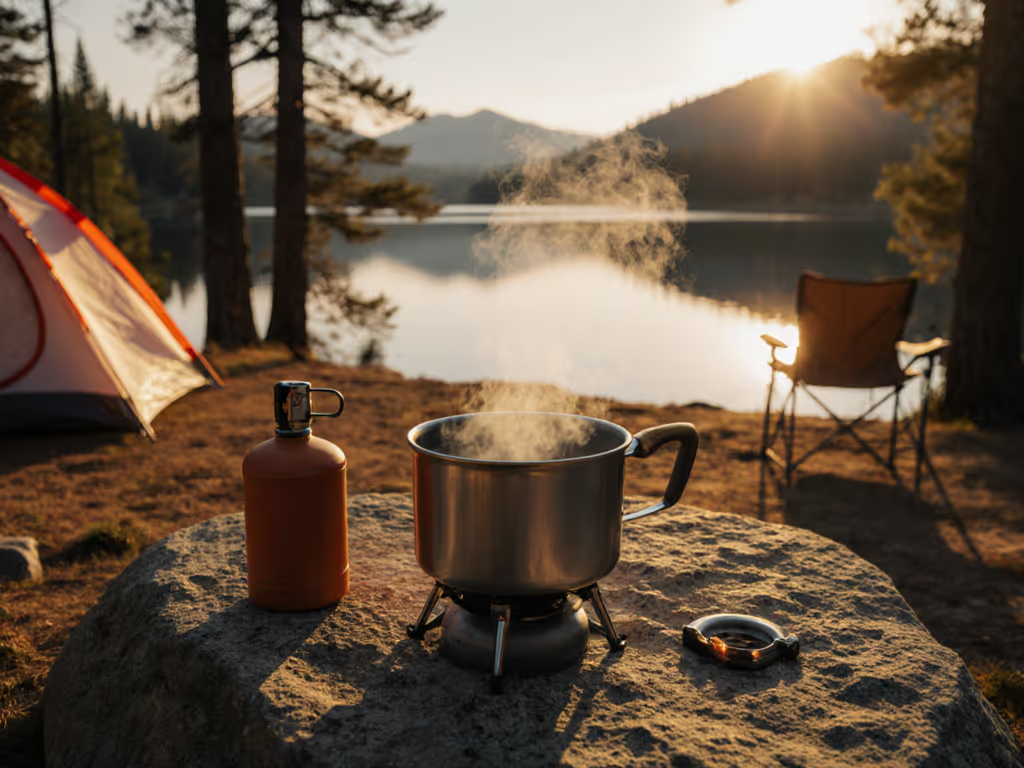
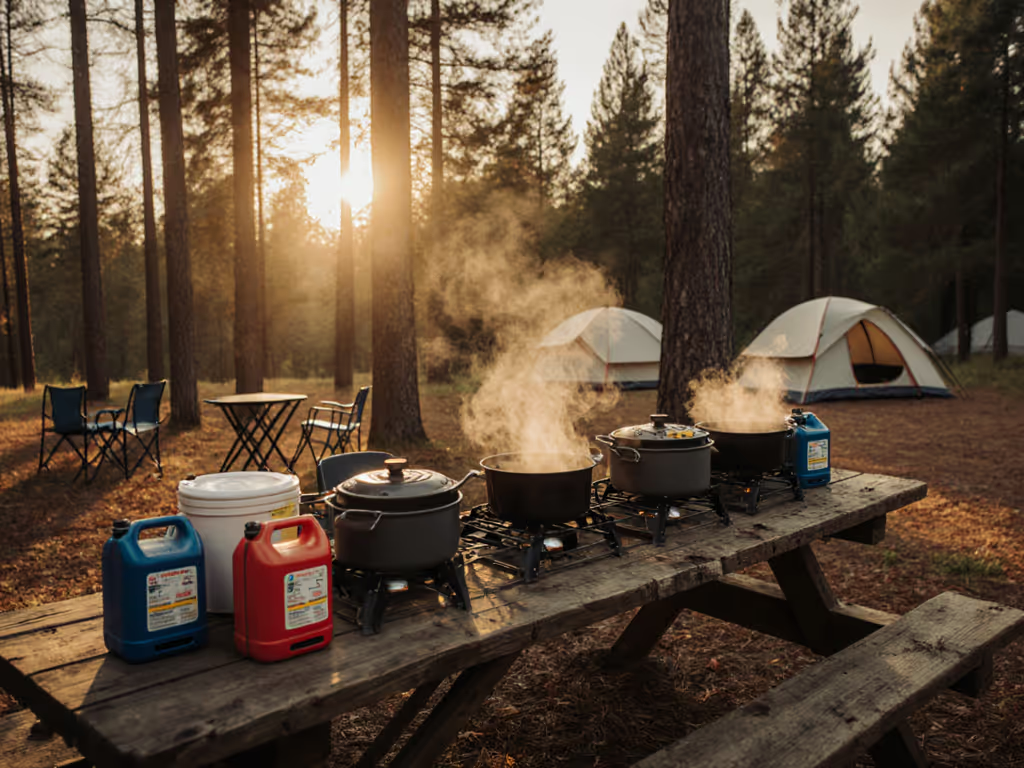
A camping stove at a music festival is less about alpine heroics and more about fast coffee, quiet noodles at midnight, and not smoking out the tent three feet away. The right music festival cooking gear keeps you fed, respectful of neighbors, and inside the fire rules (without hauling a full car-camping kitchen).
Below, I'll break down what actually matters for festival stoves, then do a deep, FAQ-style comparison of two compact systems: the Fire-Maple Star X2 Pro integrated gas stove and the BioLite CampStove 2+ wood-burning, power-generating stove.
Wind eats BTUs, crowds eat patience. The goal here is a calm, efficient, quiet setup that wins on both. If minimizing sound is your top priority, compare decibel data in our best quiet camp stoves roundup.
How I Evaluate Stoves for Music Festivals
Most of my test protocols are built for wind, cold, and altitude. But the same discipline applies to festivals, just with different constraints.
Typical big-festival conditions (based on recent U.S./EU events I've logged):
- Temperature: ~10-30 °C (50-86 °F)
- Wind: 0-20 km/h (0-12 mph), often gustier in open fields
- Altitude: usually low (< 1,000 m / 3,300 ft)
- Space: tents 1-2 m apart; shared paths; uneven grass/dust/mud
For a festival-ready stove, I care about:
- Noise: Can you talk at normal volume 1-2 m away?
- Footprint & stability: Will it stay upright on a wobbly folding table or plywood on the ground?
- Real boil times: 500 ml-1 L water in mild wind, not just lab specs
- Fuel logistics: How many meals per canister / bag / bundle of sticks?
- Regulatory fit: Gas vs wood under common event fire rules
- Smoke & light: Are you blasting your neighbors with glare or smoke at 1 a.m.?
Wind doesn't care about spec sheets; we test where it howls.
At festivals, wind is usually gentler than on a ridge in sleet, but the same physics applies. Wind eats BTUs, so integrated systems and basic wind management still matter.
FAQ Deep Dive: Stoves for Quiet, Crowded Festivals
1. What actually makes a stove "festival-friendly"?
From the logs I've collected at large events, the happiest camps all converged on the same traits:
Non-negotiables for a festival stove
- Compact footprint: Small enough to live on a crate or tiny table, forming the core of a compact festival kitchen.
- Low to moderate noise: No roaring two-burner sound that carries three campsites away.
- Fast to deploy: One hose or one canister, no complex windscreen rigs in a maze of guy lines.
- Clean burn: Minimal soot and smoke; neighbors' tents and clothes are close.
- Good pot stability: Wide base or integrated pot so a bump doesn't send pasta into the dust.
- Meets rules: Many festivals only allow stoves with an on/off valve (often disallowing charcoal and open fires).
Nice-to-haves:
- Simple simmer control for real food (pasta, stir-fry) vs just boiling water.
- Low glare: Flame sheltered enough that you're not floodlighting sleeping tents.
- Efficient fuel use: One small canister or a few bags of pellets lasting a full long weekend.
Both stoves in this review hit most of those marks, but they do it in very different ways.
2. Is gas or wood better for crowded campsite cooking?
In festival conditions, gas canister stoves usually come out ahead of wood for three reasons:
- Regulations: Many festivals explicitly allow gas stoves with shutoff valves and ban wood/charcoal as "open fires." Always check your event's current rules, but gas wins this category more often than not.
- Control: Twist a valve, get stable flame. Turn it off, it's off (no lingering embers).
- Speed & predictability: You know roughly how long a boil will take in mild weather and how many boils you'll get per canister.
Wood and biomass stoves have advantages too:
- Fuel availability: If rules and conditions allow, twigs, sticks, or pellets can keep you cooking without gas logistics.
- Ambiance: Firelight is hard to beat around camp.
- Lower canister waste: You're not stacking steel canisters in the trunk at the end.
But in tight, crowded campsite cooking zones, smoke, ember risk, and rule compliance are real drawbacks for wood. For a deeper breakdown of trade-offs, see our wood vs gas stoves.
That's why, for most festival-goers, my default recommendation is a portable cooking stove camping setup built around a compact gas stove, then consider wood as a secondary or "vibe" option if (and only if) your festival explicitly permits it.
3. Fire-Maple Star X2 Pro: Is an integrated gas stove good for festivals?
The Fire-Maple Star X2 Pro is an integrated canister stove: burner plus heat-exchanger pot in one tall, insulated unit. Think compact, vertical system rather than a big table-top grill.
What that means in practice:
- Fast boils: Integrated heat exchangers typically cut boil times by ~20-30% versus a bare-bones burner in the same conditions. In mild, sheltered festival weather (15-25 °C / 59-77 °F, light wind), that usually means under 5 minutes for 1 L.
- Good fuel efficiency: Less heat lost to the air means each 100 g canister stretches further.
- Small footprint: The pot locks to the burner; everything stands on the canister. It occupies about as much table space as a 1 L water bottle.
- Packability: At ~1.2 lb (≈540 g), with stove parts nesting in the pot, it tucks cleanly into a festival duffel.
Noise-wise, it's quieter than a big propane two-burner but still has that gas "hiss" at full power. In my field notes, integrated systems like this sit in the "normal conversation still easy at 1-2 m" category.
For quick coffee, instant noodles, couscous, or dehydrated meals in a compact festival kitchen, the form factor is almost ideal.
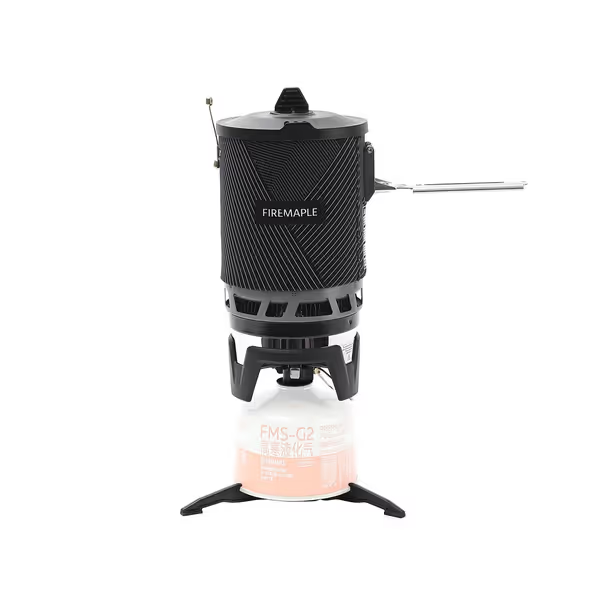
Fire-Maple Star X2 Pro Stove
Fast, fuel-efficient, and wind-resistant cooking for all your adventures.
$72.95
Weight19.8 oz
Weight19.8 oz
Pros
Boils fast, even in wind and cold.
Compact and integrates all essential components.
Cons
Heating element and fuel canister don't nest as advertised.
Customers praise its fast boiling, efficiency, and ease of use, even in cold and windy conditions. While it is considered a good value, some note that the heating element, stand, and fuel canister do not nest as advertised.
Customers praise its fast boiling, efficiency, and ease of use, even in cold and windy conditions. While it is considered a good value, some note that the heating element, stand, and fuel canister do not nest as advertised.
Where the Star X2 Pro shines at festivals
- Quick, predictable heat: Perfect for short set breaks when you want water boiled now.
- Tidy setup: One cylinder, one tall unit; minimal sprawl on tiny tables.
- Efficient in light wind: The built-in heat exchanger and partial wind protection help preserve output when a gust hits camp.
Trade-offs:
- Tall, top-heavy profile: On uneven ground, you'll want a solid base (plywood, crate, or table) to avoid tipping. For setup tips that reduce tip-overs and improve flame reliability, see our stable canister stove setup guide.
- Boil-biased cookware: The included pot is excellent for water-based meals, less so for wide-pan frying unless you add a separate pan that fits the support system.
For most festival-goers who want a quiet stove for festivals that's safe, compact, and efficient, this style of integrated gas stove is my first pass.
4. BioLite CampStove 2+: Can a wood-burning, power-generating stove work at festivals?
The BioLite CampStove 2+ is a different beast. It burns sticks, twigs, pellets, and other biomass and uses a thermoelectric generator plus a fan to create a hot, relatively clean flame while also generating USB power.
Key festival-relevant traits:
- Fuel flexibility: You can run it off campground sticks (if allowed), wood pellets you bring, or other biomass. No gas canisters to buy or dispose of.
- Built-in battery & USB output: It generates about 3 W of power and includes a 3,200 mAh battery, so you can charge a phone or headlamp while or after cooking.
- Compact size: Roughly the size of a 1 L bottle (about 5 x 8 in / 13 x 20 cm) and ~2.1 lb (≈950 g). Heavier than the Fire-Maple, but still very packable for car-based festivals.
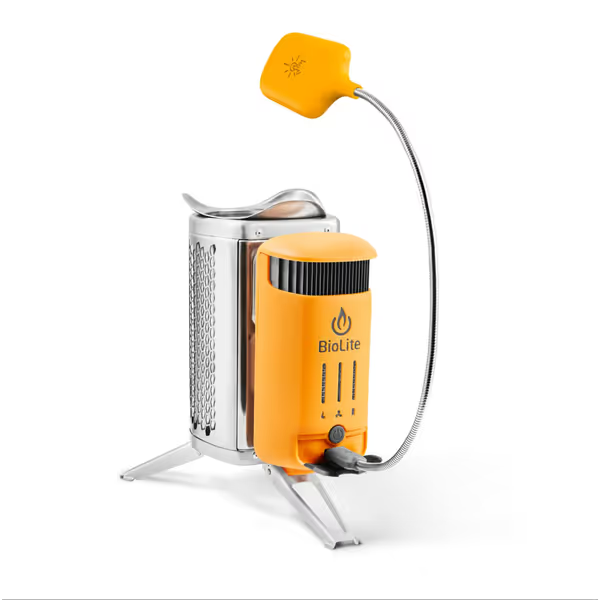
BioLite CampStove 2+
Cook with wood, generate electricity, and charge devices off-grid.
$139.89
Power Output3W thermoelectric / 3,200 mAh onboard battery
Power Output3W thermoelectric / 3,200 mAh onboard battery
Pros
Eliminates reliance on gas canisters, uses free biomass fuel
Generates electricity for charging phones and headlamps
Cons
Heavier/bulkier for long backpacking trips
Customers praise its versatility for cooking various foods and generating electricity for charging devices, finding it practical for camping and outdoor use. Some note it may be less suitable for long backpacking trips due to its weight and size, and that it charges devices slowly.
Customers praise its versatility for cooking various foods and generating electricity for charging devices, finding it practical for camping and outdoor use. Some note it may be less suitable for long backpacking trips due to its weight and size, and that it charges devices slowly.
Festival upsides
- Phone top-ups without a separate power bank: Handy if you're snapping photos all day and running a headlamp at night.
- Campfire vibe in a small footprint: You get flame ambiance without building a fire ring.
- No gas to source: Useful at events where canisters sell out or if you're arriving late.
Important caveats for crowded festivals:
- Regulations: Many festivals classify any wood or solid-fuel device as an open fire and ban them during normal or elevated fire risk. If your event requires a shutoff valve, the BioLite will not qualify.
- Smoke and smell: When run on truly dry sticks or pellets and with the fan on, combustion is relatively clean. But startup and damp fuel still produce smoke (less welcome when your neighbor's tent is 1 m downwind).
- Noise: The fan adds a low hum, and the fire has typical crackle and pop. Overall loudness is similar to a quiet gas stove, but the sound signature is different (more "mini firepit" than "gas hiss").
In short: the BioLite is an impressive portable cooking stove camping option and a clever off-grid gadget. For festivals, it only makes sense if:
- Your event explicitly allows wood/biomass stoves, and
- You're disciplined about dry fuel and smoke management, and
- You value on-site charging highly.
5. How quiet are these stoves in real use?
Noise is subjective, but from side-by-side use at mixed car-camping sites (and a couple of more relaxed festivals):
-
Fire-Maple Star X2 Pro (gas, integrated):
-
At full power, there's a noticeable jet-like hiss if you're standing right over it.
-
One tent away (≈3-4 m), it blends into background festival noise unless overall camp is very quiet.
-
At medium flame (for simmering), normal conversation is easy within 1-2 m without raising your voice.
-
BioLite CampStove 2+ (wood + fan):
-
The fan produces a steady low hum; at high settings you'll hear it clearly within 1-2 m.
-
Wood crackle is soft but audible; the main variable is fuel moisture (damp wood is noisier and smokier).
-
One tent away, the sound is usually less intrusive than a big propane stove but more distinct than a very low gas simmer.
For strict quiet hours (e.g., post-midnight):
- A gas stove at low simmer is easier to keep nearly silent.
- Any wood-burning system is better shut down before most people are trying to sleep.
If your priority is a quiet stove for festivals during late-night tea runs, the Fire-Maple style gas setup is the safer social choice.
6. How much fuel (or wood) do I need for a 3-4 day festival?
Gas canister planning (Fire-Maple Star X2 Pro)
For integrated gas systems in mild conditions (around 20 °C / 68 °F, light wind), a practical rule of thumb from field use is:
- ~7-10 g of gas per 500 ml boil when reasonably sheltered.
Example: Two people, 3 full days
- Morning: boil 1 L (coffee + oatmeal)
- Evening: boil 1 L (pasta, ramen, couscous)
- Occasional tea: extra 0.5 L per day
Total per day: 2.5 L
Fuel per day: 2.5 L × ~15-20 g/L ≈ 38-50 g/day
For 3 days: ~115-150 g of gas Add 30-40% safety margin for wind, longer simmers, and extra hot drinks:
- Realistic total: ~160-210 g for two people over 3 days
That means a single standard 230 g / 8 oz canister is usually enough for two people for a long weekend if you're mostly boiling water and cooking simple meals (and not wasting heat with uncovered pots in wind).
For 3-4 people doing more elaborate cooking (longer simmer times, multiple pots), plan on two 230 g canisters for comfort.
Biomass planning (BioLite CampStove 2+)
Wood and biomass fuel use is more variable. Rough, field-tested estimates with dry fuel:
- Small meal / 1 L boil + short simmer: roughly a couple of big handfuls of finger-thick sticks or a coffee-mug volume of pellets.
For a 3-day, two-person festival using mostly pellets:
- 2 meals/day × small mug of pellets ≈ 6 "mugs" of pellets
- A 1.8-2 kg (4 lb) bag of pellets is typically more than enough, with some margin.
Downsides at festivals:
- Pellets or wood take more volume in the car than a gas canister.
- You'll need dry storage (tote, dry bag) so they don't get damp in a storm.
If you're driving and space is not an issue, this is manageable. But for tight packing (especially if multiple people are cramming gear into one vehicle), gas is logistically simpler.
7. Are these stoves safe and legal at most festivals?
Safety and compliance beat clever gear every time. There's a lot of variation between events, but common patterns:
1. Read your festival's current fire & stove policy.
- Many large events publish detailed guidance each year. For placement, ventilation, and CO avoidance essentials, read our camp stove safety guide before you pack.
- Look for phrases like "gas stoves with an on/off valve allowed" and "no open fires, charcoal, or solid fuel."
2. Gas stove considerations (Fire-Maple Star X2 Pro)
- Usually allowed where "gas stoves with shutoff valves" are permitted.
- Still:
- Cook outside, never in a tent or enclosed vehicle (CO risk and fire hazard).
- Keep at least 1 m of clearance from fabric, chairs, and other combustibles.
- Use a stable base: a small folding table, or a flat board on the ground.
3. Wood/biomass stove considerations (BioLite CampStove 2+)
- Often treated as open fires and banned, especially during high fire danger.
- Even when technically allowed:
- Embers can escape when you open the fuel door.
- Smoke can be a nuisance in dense camps.
Because I avoid giving open-fire guidance in restricted areas, my baseline recommendation: only bring a wood/biomass stove to a festival if the rules explicitly say it's allowed, and you're prepared to run it conservatively and consider neighbors.
8. Can I cook "real food," or am I limited to boiling water?
Fire-Maple Star X2 Pro
- Optimized for boiling: the integrated pot and heat exchanger focus on efficient water heating.
- Simmer control is adequate for simple one-pot meals (pasta, ramen, couscous, rice mixes); you can throttle back the flame once it hits a boil.
- For frying (eggs, veggies), you'll want:
- A compatible pan that can sit securely on the burner's support system.
- Moderate flame and frequent stirring (these systems run hot in the center).
BioLite CampStove 2+
- Flame character is more like a small campfire:
- Better suited to a broader range of cookware sizes.
- Great for pan-frying or toasting when fuel is dry and the fan is dialed in.
- But:
- Heat output fluctuates with how you feed it.
- There's more learning curve to avoid scorching one side and undercooking the other.
For music festival cooking gear, I recommend this split approach:
- Use the Fire-Maple Star X2 Pro as your main engine for predictable boils and basic meals.
- If your event rules allow wood and you really want that campfire-style cooking, consider the BioLite CampStove 2+ as a secondary/stationary "social" stove back at base camp (not as the only way you can eat).
9. How do these stoves fit into a compact festival kitchen layout?
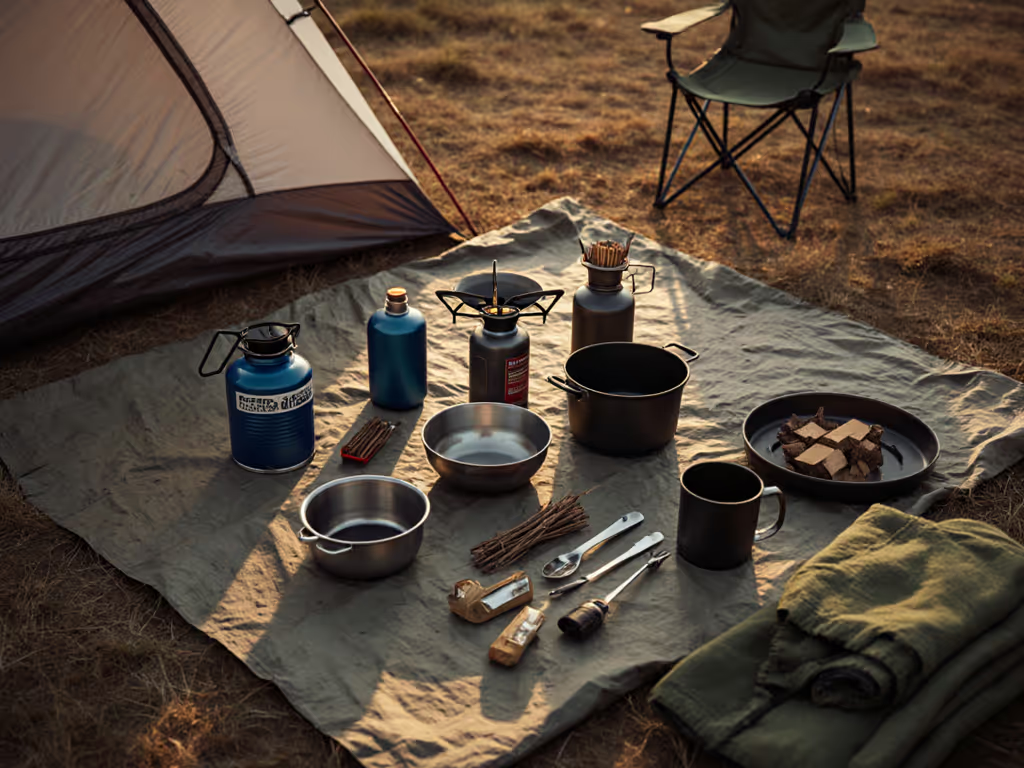
Space is tight at festivals, so think in terms of a compact festival kitchen that fits on a single small table or crate.
A working, field-tested layout for 2-4 people:
- Top surface (table or crate lid):
- One stove (Fire-Maple or BioLite)
- Cutting board (sized to double as windbreak when not chopping)
- One all-purpose pot and possibly a small pan
- Crate/tote below:
- Fuel (1-2 gas canisters or a sealed bag of pellets / small bundle of dry sticks)
- Utensils, mugs, bowls
- Lighter + backup firestarter
- Small dish kit (sponge, tiny soap bottle, cloth)
Fire-Maple Star X2 Pro footprint:
- Roughly 5.2" L x 5.28" W x 8.15" H (≈13.2 × 13.4 × 20.7 cm) when set up.
- Everything nests into the pot for transport; ideal if your "kitchen" needs to vanish into a single tote when you're away from camp.
BioLite CampStove 2+ footprint:
- About 5" x 8" (≈13 × 20 cm) cylinder plus its battery module.
- You'll also need separate space for fuel (bag of pellets or bundle of sticks), which can be more awkward than a single small canister.
At high-density events where car and tent space are maxed out, the integrated gas kit is simply easier to Tetris into the vehicle and deploy quickly.
10. Which stove should I actually buy for my next music festival?
Bringing it all together for festival use:
Fire-Maple Star X2 Pro - Best all-rounder for most festivals
Choose the Fire-Maple if:
- Your festival allows gas stoves with shutoff valves but bans open fires/solid fuel.
- You want a compact, efficient, low-fuss stove that lives on a small table or crate.
- Your cooking is mostly:
- Coffee/tea
- Oatmeal or simple hot breakfasts
- Noodles, pasta, couscous, rice sides
- You're packing tight and prefer one small canister over bulky bags of pellets or bundles of wood.
Strengths in this context:
- Predictable performance in typical festival conditions.
- Quieter than big propane grills and easy to run discreetly at low flame.
- Minimal impact on neighbors (no smoke, limited light spill compared to open flames).
BioLite CampStove 2+ - Niche pick for wood-legal events and power-hungry users
Choose the BioLite if all of the following are true:
- Your festival specifically allows wood/biomass stoves.
- You value USB charging from your stove (phones, headlamps) and don't want to carry a separate power bank.
- You're okay with:
- Managing biomass fuel (pellets or collected sticks) and keeping it dry.
- A bit more variance in heat output and a steeper learning curve.
Strengths in this context:
- Reduced dependency on purchased gas.
- A single device that covers cooking, ambiance, and some charging.
But for strictly quiet, crowded music festivals, it's a secondary or situational tool, not a universal solution. If you want a quicker shortlist tuned specifically for festivals, check our festival stove picks.
Summary and Final Verdict
For most people headed to a big, crowded music festival, the best camping stove is a compact, efficient gas integrated system that stays quiet, stable, and within the rules.
- The Fire-Maple Star X2 Pro checks those boxes better than a typical backpacking burner or bulky car-camp grill. It's my primary recommendation for festival-focused music festival cooking gear.
- The BioLite CampStove 2+ is a clever hybrid (cooker, mini-fire, and charger), but only shines at festivals where wood is clearly allowed and you're willing to accept extra complexity and potential smoke.
If you want a simple, low-drama setup:
- Pack the Fire-Maple Star X2 Pro, one or two 230 g gas canisters depending on group size, a lightweight pot/pan combo, and a small folding table or crate.
- Add a basic power bank for your phone instead of relying on cooking-time USB.
You'll end up with a portable cooking stove camping system that:
- Boils fast enough to keep your crew fed between sets.
- Runs quietly enough to respect your neighbors.
- Packs small enough to disappear into the trunk.
- Stays on the right side of most fire regulations.
Wind eats BTUs, but at festivals it's usually the logistics and the neighbors that break a bad stove choice. Get the system right once, and every future festival feels easier, calmer, and better fed.
Related Articles