Integrated vs Modular Stove Systems
By Tenzin Dorje • 19th Feb
The promise of integrated vs modular stove systems hinges on a false binary. Neither camp has discovered the universal answer, because the right choice depends entirely on your route, season, fuel discipline, and tolerance for complexity. A critical look at this camp cooking philosophy comparison reveals that most outdoor cooks are chasing speed or simplicity when they should be chasing reliability.
Why the Integrated System Sells a Comfortable Story
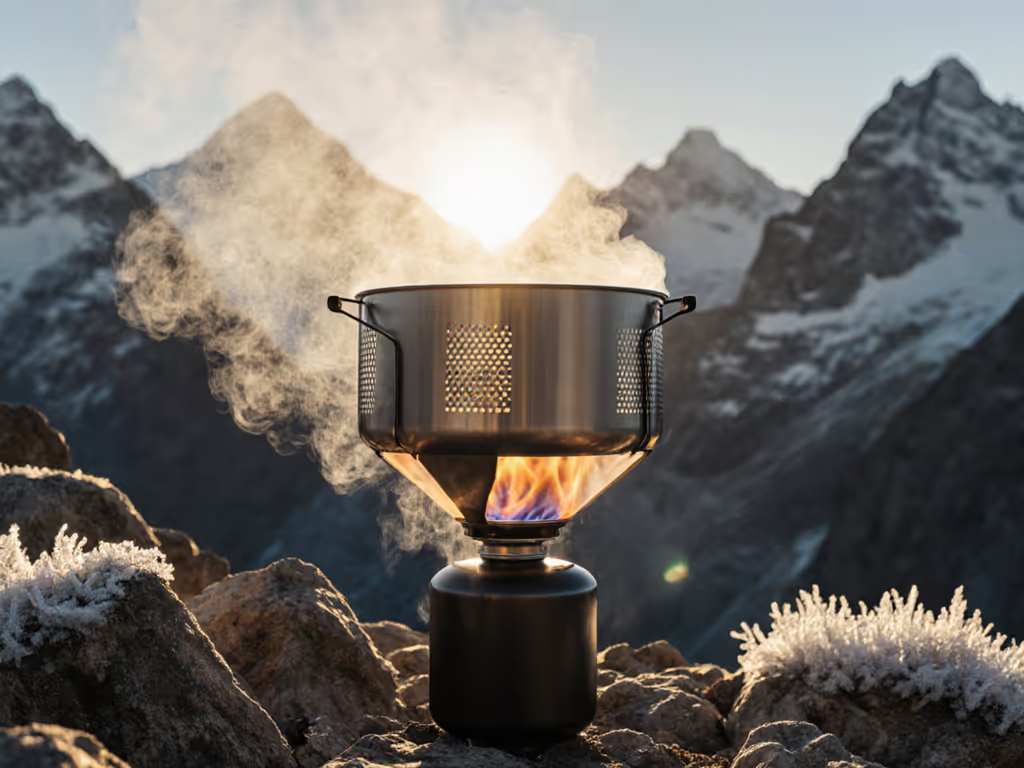
Integrated stove systems - think Jetboil, MSR WindBurner, or the newer Stash models - present themselves as the answer to meal fatigue. Everything nests into one pot. Burner screws onto canister. Lid twists on top. Boil times measured in three minutes instead of eight. The marketing is seductive because it solves a real friction point: if you're melting snow or brewing coffee at 7,000 feet after a long day, the idea of touching your system once and walking away holds genuine appeal.
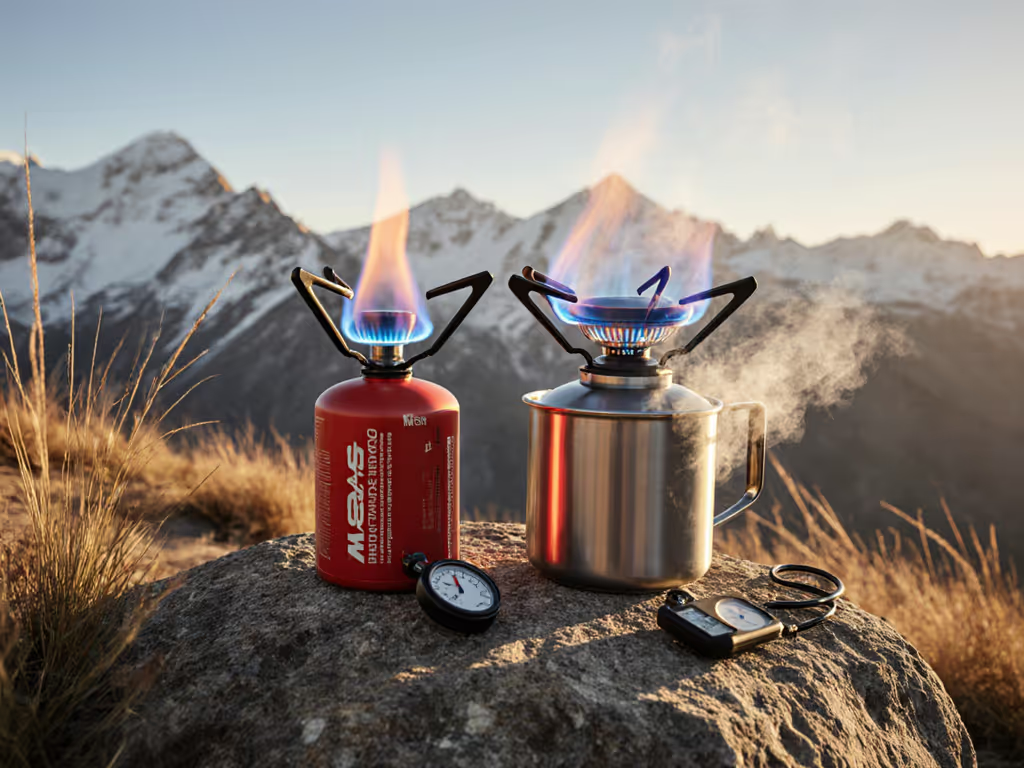
Where integrated systems genuinely excel is in efficiency and speed. The FluxRing heat exchangers and radiant burner technology found in units like the Jetboil MiniMo transfer heat from flame to pot so effectively that fuel consumption drops measurably. For someone planning a three-night summer trip in moderate conditions, buying the integrated path eliminates decision fatigue and delivers predictable boil times regardless of wind. For data on wind performance across designs, see our remote vs integrated wind test.
But here's where skepticism must override the sales pitch: speed and simplicity are not the same as safety or longevity.
The Real Cost of All-in-One Integration
Integrated systems make a critical compromise: they couple the burner, ignition system, and pot into one rigid unit. That means if your piezo igniter fails - and in wind, cold, or after a tumble, they will - you cannot light your stove without field repair or a backup lighter. The canister sits tall and exposed, making the whole setup prone to tipping on uneven ground, especially when you're standing at altitude with numb hands trying to balance a pre-boil meal.
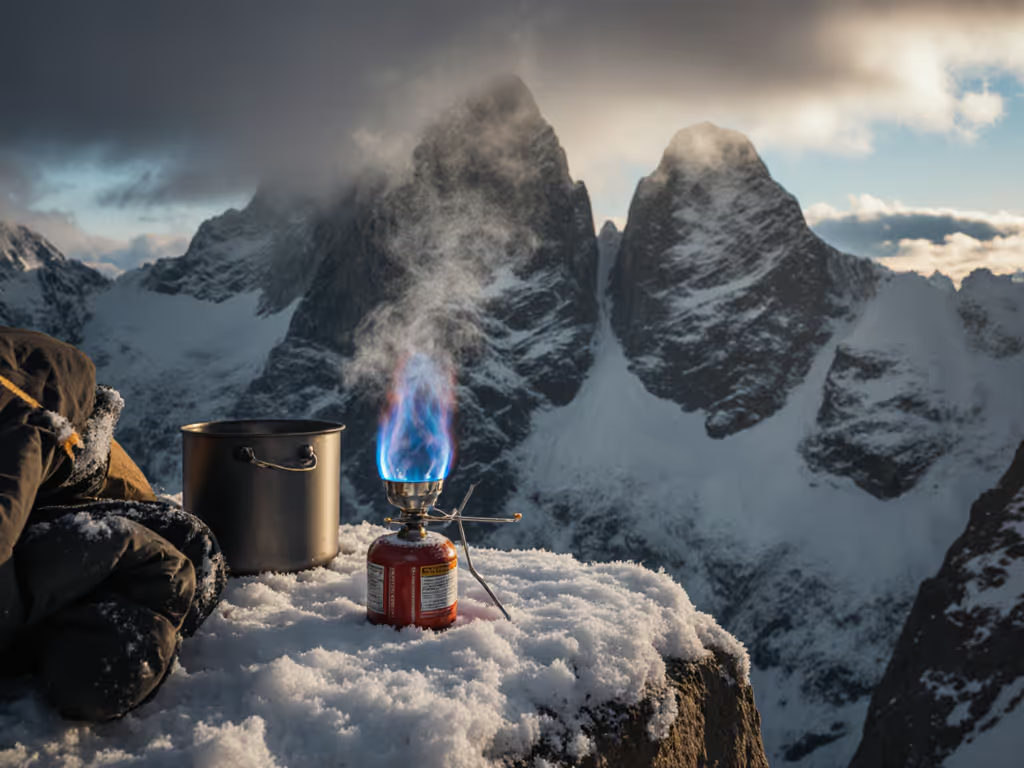
In cold conditions below -5 °C, integrated canisters begin to lose pressure as vapor molecules stick to pot walls and fuel lines. A pressure regulator helps, but even regulated systems underperform compared to their remote-canister cousins. Non-integrated (remote) canister stoves allow you to invert the fuel bottle, shifting from vapor draw to liquid feed, which maintains pressure and flame stability where integrated systems falter. If you stick with canisters in the cold, start with these canister cold-weather strategies. This is not academic - it is the difference between melting snow for a thermos at dawn and spending an hour nursing a dying flame while your team waits thirsty.
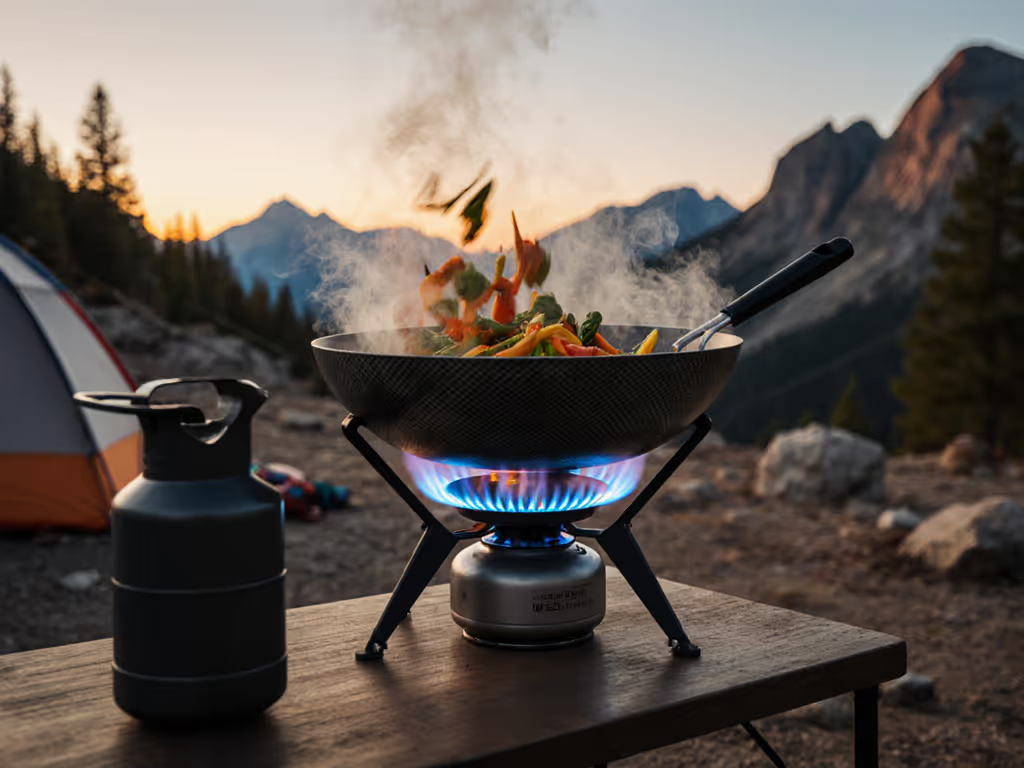
The nested pot design, while clever for packing, creates a thermal penalty if you need to cook actual food rather than boil water. A narrow pot with tall sides concentrates heat at the center but leaves edges cool; sautéing or browning ingredients becomes a study in frustration. And when heat exchangers are optimized for speed, simmering often means you are either way too hot or extinguished.
What Modular Systems Promise - and Actually Deliver
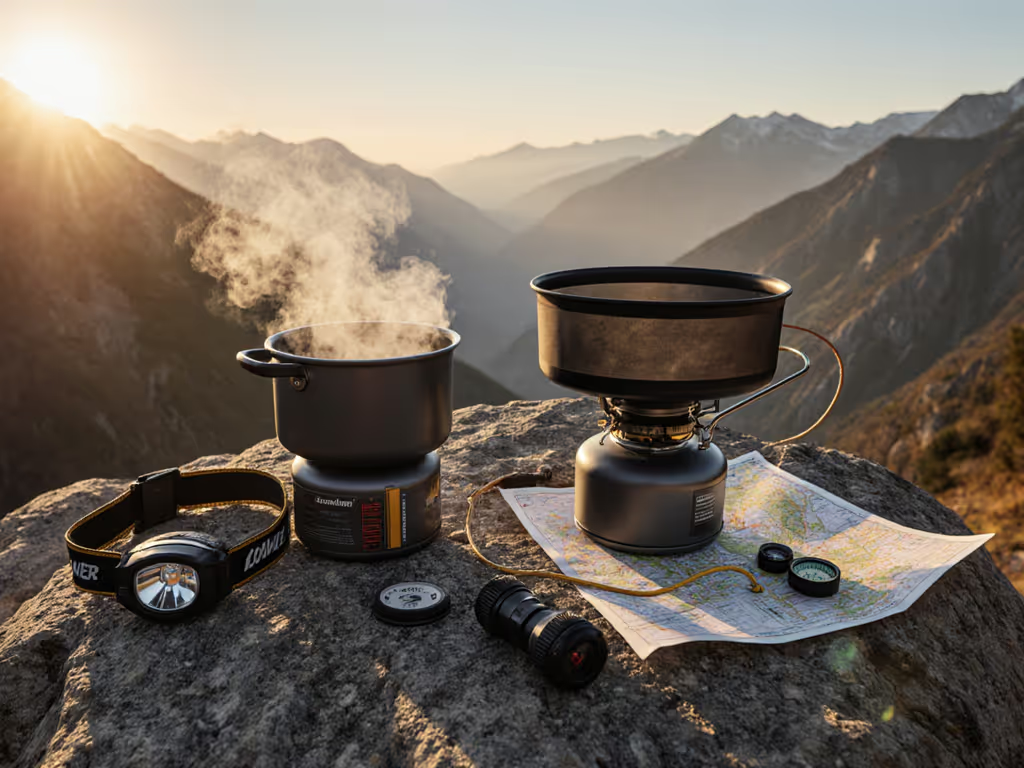
Modular platforms represent a different philosophy entirely: they prioritize adaptability and field serviceability over speed. A modular rig lets you swap burners, upgrade to a pump for liquid fuel, or scale from one person to four by changing pots and support stands. The Primus PrimeTech system and MSR Reactor exemplify this approach, allowing you to add or remove components based on the trip.
The practical advantage is resilience. If a burner head cracks, you swap it; if an igniter fails, you light with a backup match because the burner is separate. You can use any pot that fits the connector, meaning you can optimize for your menu: a saucepan for porridge, a skillet for eggs, or a tall pot for rice. Simmer control is generally finer because the burner is not engineered into a single, sealed heat-exchanger pot.
For winter travel, modular stove versatility extends to fuel choice. To choose the right system, compare our canister vs liquid fuel guide. A modular rig designed for liquid fuel (white gas, kerosene, or unleaded) eliminates canister pressure issues entirely. Liquid fuel vaporizes reliably at temperatures where canisters become museums of frozen regret. You pump, you prime, you separate melt and brew cycles (boil once for water, then use that heat to brew coffee), and your team stays hydrated. Cold punishes mistakes; redundancy and priming keep kitchens alive.
The drawback is that modular systems demand more skill and patience. Priming white-gas stoves requires discipline: you heat a small amount of fuel in a cup beneath the burner to vaporize the main line. Get step-by-step stove priming techniques to avoid flare-ups and ensure reliable burns. Done carelessly, you get a flare-up and soot. Done correctly - shielded from wind, with the fuel bottle warm inside your parka - you get reliable flame for hours. The team at -20 °C that fights a frozen regulator while yours primes steadily is a scenario, not a hypothetical.
The Repairability Tradeoff
Where repairability tradeoffs become unavoidable is in the field. Integrated systems are sealed ecosystems. Maintenance is minimal because there is little to maintain - until something fails. A broken burner on a Jetboil means you are stove-less; the pot cannot be decoupled and used with a borrowed camping stove.
Modular rigs demand basic competency: changing an O-ring, soaking jets in white gas, tightening a pump connector. But that competency becomes your insurance policy. A winter guide who carries a spare pump cup, extra O-rings, and knows how to disassemble and clean a liquid-fuel stove will solve a problem that would end another team's trip. This is not minimalism or cutting-edge design; it is discipline and respect for conditions.
Integrated systems have improved. The Jetboil MiniMo includes a pressure regulator and performs admirably in cold well below what earlier models could handle. But they remain fair-weather specialists. The honest claim is not that they are bad - it is that they are optimized for a specific context, and pretending they excel everywhere is where the marketing oversells the engineer's intent.
System Efficiency and Real Fuel Math
On integrated system efficiency, the numbers are genuine. Heat exchanger technology and enclosed burners reduce fuel consumption by 20-40% in controlled tests. For a two-person, three-day summer trip, that translates to carrying one fuel canister instead of two. The weight savings are real.
But efficiency is not portable across contexts. An integrated canister stove in a blizzard will use more fuel than advertised because the flame shrinks, you are shielding it with your body, and boil times stretch. A modular white-gas rig maintains steady pressure and output regardless of temperature, so efficiency is more predictable. Choose the system based on whether your trip is 90% speed or 90% consistency.
The Scalability Question
Neither approach scales well for groups. For family basecamps, our best double-burner stoves highlight stable, high-capacity options. A solo integrated stove is elegant; adding a second one for a four-person team means buying two complete systems or fussing with group cookware that integrates poorly. Modular setups allow one burner head with multiple pots, but you sacrifice speed and must manage simmering across multiple heat zones.
Honest group cooking in the backcountry is usually one large pot heated efficiently, eaten in shifts or combined into one meal. A 2–3-liter pot on a stable stand with a 30,000 BTU remote canister or a maintained liquid-fuel burner is the pragmatic choice. Integrated systems designed for single cups do not bridge that gap gracefully.
Environmental and Economic Longevity
Modular systems win on environmental grounds. Refillable fuel bottles (white gas, kerosene) mean no single-use canister waste. Replaceable components reduce the pressure to discard an entire stove when a jet or regulator fails. Over ten years of regular use, a well-maintained liquid-fuel stove becomes an heirloom rather than a disposable kit.
Integrated systems have lower friction for casual users (no priming, minimal maintenance), but they create a logistical burden: the canisters require specialist recycling, and they are illegal to ship internationally, complicating overseas trips.
Actionable Decision Framework
Stop asking "which is better." Instead, ask:
- Summer, sea-level, stable weather, solo or duo: Integrated stove wins. Speed and packability serve you.
- Winter, altitude, or extended trips with variable weather: Modular liquid-fuel rig or inverted-canister system. Reliability and field repairability matter more than boil time.
- Car camping or basecamp: A larger modular platform or propane system. You are not constrained by weight; scale for cooking capability and meal quality.
- International or remote resupply: Modular white-gas rig. Fuel availability is easier to manage.
- Three or more people regularly: Modular single burner with one large pot or a larger two-burner car-camp stove. Avoid the trap of buying multiple integrated units.
Your stove is not a trophy or a statement of minimalism. It is the engine of morale, hydration, and safety. Choose the one you can operate flawlessly under the conditions you will face - not the one that polishes best at home.
Next Steps
- Define your core trip profile: Season, temperature range, altitude, group size, meal ambitions.
- Identify your non-negotiables: If wind-proof boiling in sub-zero is essential, a liquid-fuel rig is not optional; if you prize simplicity over redundancy, integrated is honest.
- Test before committing: Borrow or rent a system in realistic conditions. Do not rely on backyard trials or marketing specs.
- Plan fuel logistics: Map where fuel types are available on your route and practice priming or canister inversion in your yard (not near soft goods, not indoors) before the real trip.
- Build a repair kit: Carry a lighter, a spare pump cup, O-rings, and a small brush if you choose liquid fuel. For canister systems, carry backup ignition and know how to rig a windscreen safely without overheating the fuel bottle.
The margin between comfort and crisis in remote conditions is not luxury - it is discipline, system knowledge, and the confidence that when you light your stove at dawn in the cold, it will perform. That confidence comes from choosing the right philosophy for your conditions and executing it flawlessly, not from chasing marketing claims or brand prestige.
Related Articles