Fuel-Specific Stove Care Guide: Avoid Cross-Type Damage
By Tenzin Dorje • 30th Nov
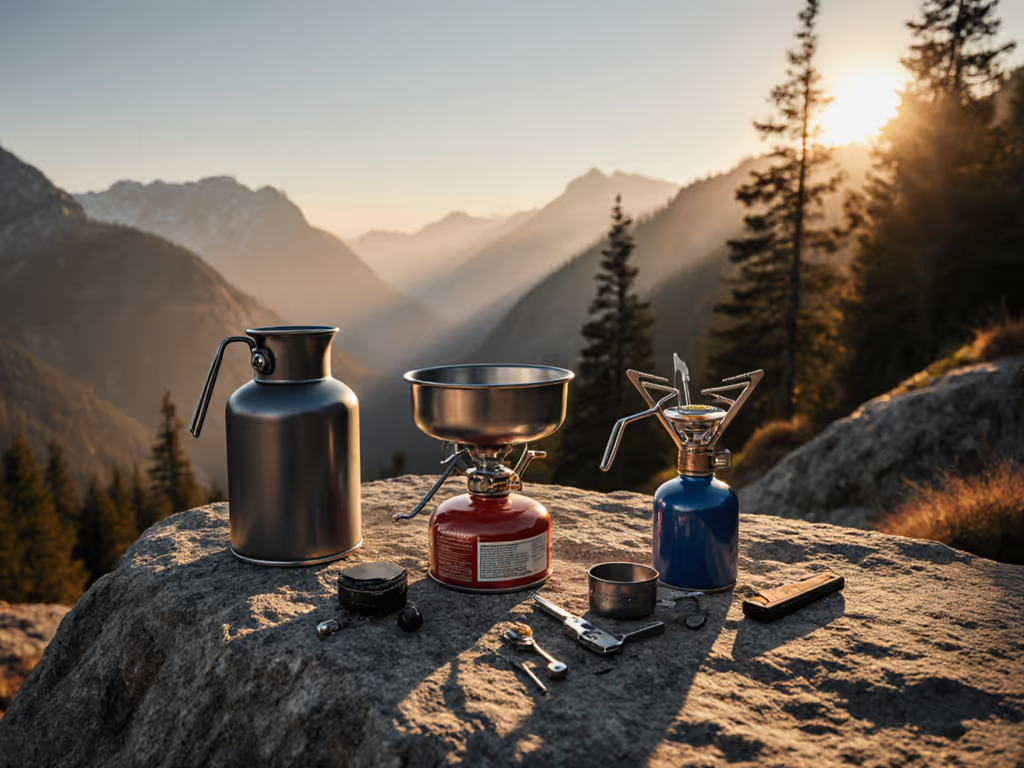
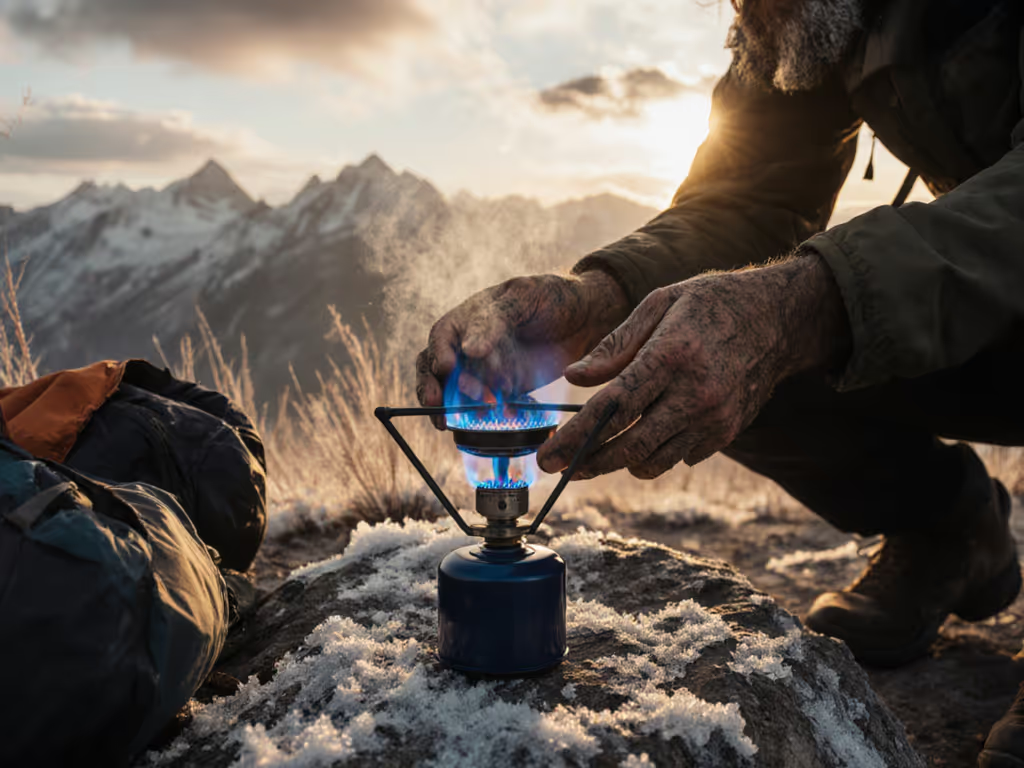
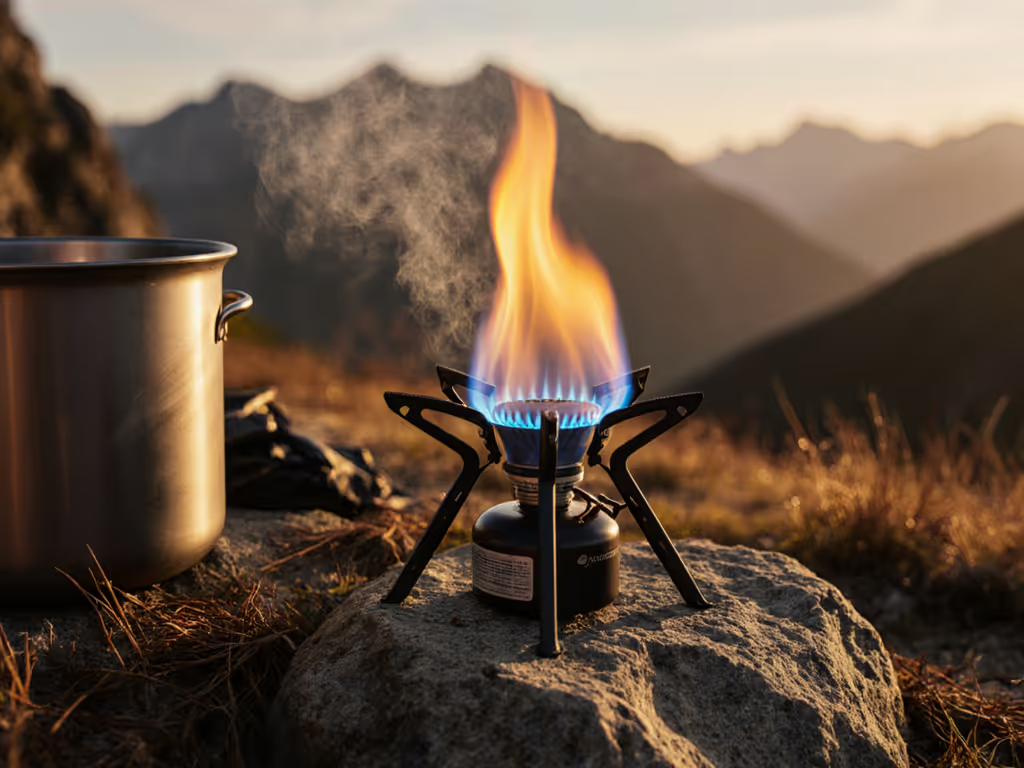
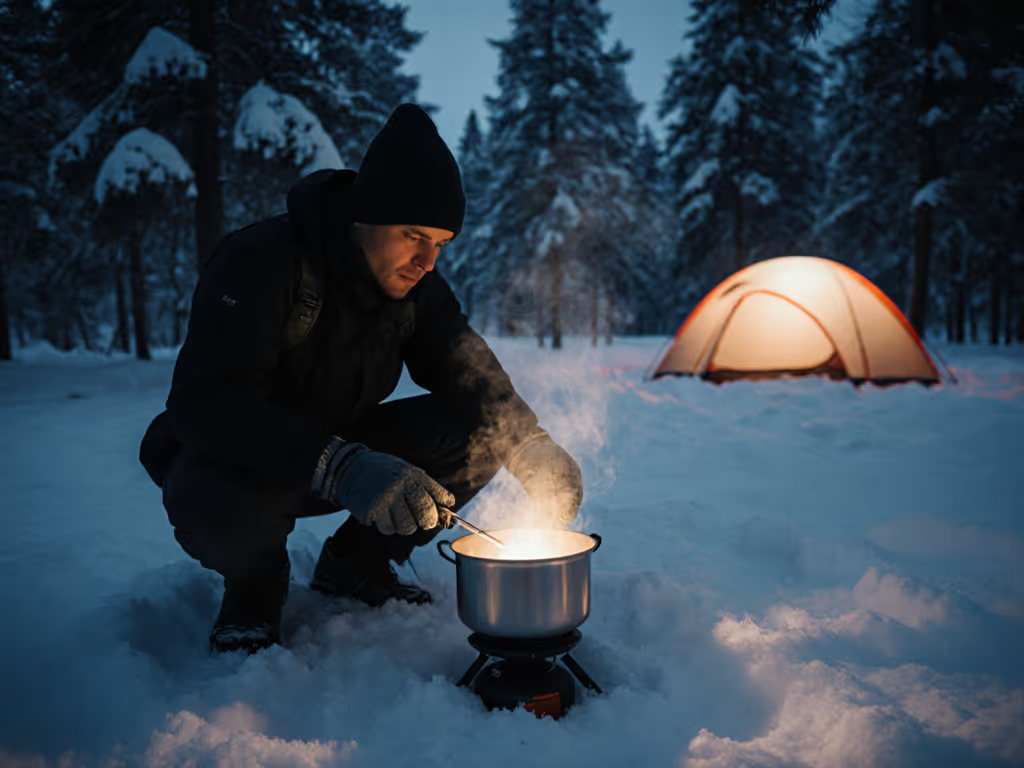
Mastering camping camp stove reliability in extreme conditions hinges on understanding one critical truth: stove type care guide adherence isn't optional, it's the margin between a hot meal and dangerous hypothermia. At -20°F (-29°C), a single oversight in fuel-system maintenance can freeze regulators solid, leaving teams without meltwater when dehydration accelerates cold injury. This isn't about convenience; it's behavioral thermodynamics. Liquid fuel requires different protocols than canister systems, and alcohol stoves demand their own focused discipline. If you're still deciding between systems, start with our canister vs liquid fuel guide. Mix these up, and you invite failure where safety margins are razor-thin. As the adage goes: Cold punishes mistakes; redundancy and priming keep kitchens alive.
Why Generic Maintenance Advice Fails in Critical Conditions
The Invisible Fuel-State Trap
Most stove failures in winter stem from misaligned maintenance practices. For a deep dive on how propane, butane, and white gas behave below freezing, see our cold-weather fuel performance analysis. Users treat all stoves as interchangeable, ignoring how fuel phase changes degrade components. Liquid fuels like white gas leave carbon deposits that choke jets at -10°F (-23°C), while propane/butane canisters lose vapor pressure below 32°F (0°C), forcing users to invert them, a move requiring specific hardware modifications. Attempting liquid-fuel deep cleaning on a canister stove (e.g., using solvent flushes) swells O-rings, causing explosive leaks. Conversely, neglecting liquid fuel line flushing leads to frozen fuel gels that starve burners in -15°F (-26°C) conditions.
Real-World Consequences of Cross-Contamination
I've seen teams abandon objectives because they:
- Used WD-40 (petroleum-based) on alcohol stove valves, gumming up jets with residue that won't burn cleanly below 40°F (4°C)
- Submerged electronic igniters in water during liquid fuel maintenance, killing spark mechanisms before they hit the trail
- Ignored O-ring preservation, letting dry-rotted seals leak fuel at altitude where oxygen is scarce
These aren't hypotheticals. During a Sierra Nevada traverse, a group's canister stove failed because they'd cleaned it with degreasers intended for liquid fuel systems. The solvent compromised the regulator's polymer diaphragm. At 11,000 feet, the stove coughed and died (while melting snow). Their backup? An alcohol stove with insufficient BTU output for ice-to-water conversion in sub-zero temps. That night, they rationed snow-eaten calories. Redundancy failed because maintenance protocols bled together.
Problem/Solution: Fuel-Specific Protocols for Winter Survival
Canister Stove Care: Precision Over Simplification
Most vulnerable component: Regulator assembly
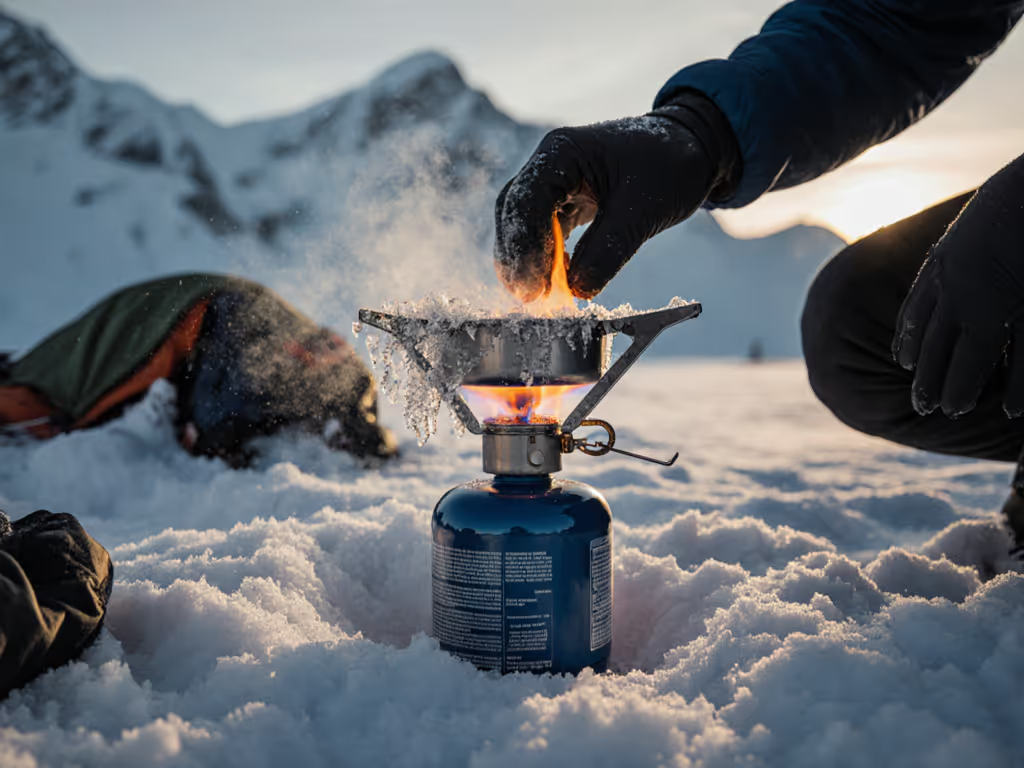
Risk: Inverted canister use (essential below 20°F/-7°C) exposes regulators to liquid fuel slosh, causing freeze-ups if moisture enters.
Mitigation:
- Protect the regulator from wind during every priming cycle, and use a rock wall or a windscreen with 360° clearance\
- Never invert standard upright canister stoves; only use integrated liquid-feed designs (e.g., systems with dedicated liquid valves)\
- Post-trip: Wipe regulator ports dry with a microfiber cloth, and never blow air (moisture condenses inside)\ For step-by-step regulator cleaning and clog prevention specific to canister stoves, follow our canister maintenance guide.
Critical reminder: Your best canister stove for winter is useless if you skip pre-trip checks at 40°F (4°C). Simulate cold by chilling it in a freezer for 20 minutes, then test regulator flow. If flame sputters, replace O-rings now (not when ice-crust forms on your beard).
Liquid Fuel Maintenance: The 30-Second Jet Inspection Rule
Most frequent failure point: Clogged jets
Reality: At 0°F (-18°C), white gas forms viscous gels that trap particulate matter. A single 0.3 mm jet blockage drops output by 70%.
Protocol:
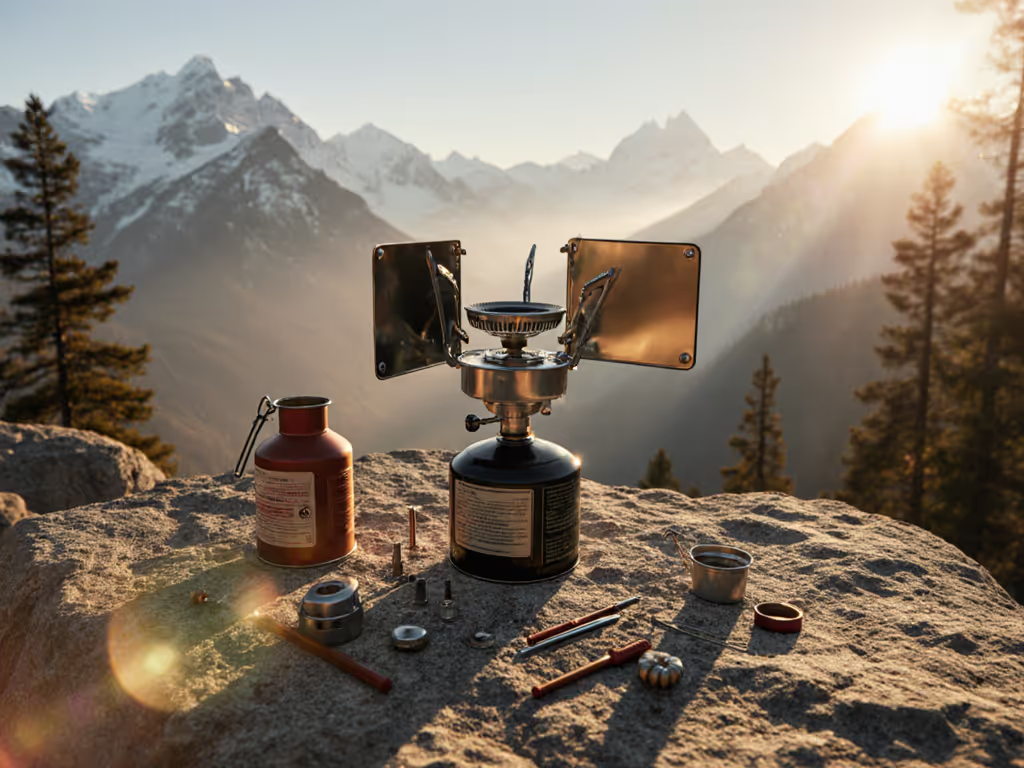
- After every use, remove the jet with a needle tool\
- Hold against light, and if you can't see through it, replace it\
- Flush the fuel line with isopropyl alcohol (not solvents!) through the pump nozzle\
This disciplined liquid fuel maintenance prevents "partial flameouts" where burners ignite but can't sustain boil temps in wind. If flame quality still degrades, use our field repair checklist to diagnose jets, pumps, and lines before they fail. Remember: pumps need silicone lube only on the cup seal, not on valves, to avoid fuel-line contamination. Never store with fuel inside; residual liquid oxidizes into varnish that gums systems at -10°F.
Alcohol Stove Upkeep: Simplicity Demands Vigilance
Hidden weakness: Fuel purity
Fact: Methylated spirits absorb moisture from humid air within 48 hours, reducing vapor pressure below -5°F (-21°C).
Field Procedure:
- Seal fuel bottles inside two zip-locks with desiccant packs\
- Before winter trips, distill fuel via sunlight evaporation (clear container, black base) to remove water\
- Check simmer rings monthly for carbon buildup, and never use wire brushes (scratches trap residue)\
Boundary adherence: Never rely solely on alcohol stoves in true winter conditions. They lack the BTU output for snow melting when temperatures dip below 20°F. Use them only as secondary systems with liquid fuel maintenance backups.
Redundancy: Your True Winter Safety Net
The 24-Hour Pre-Departure Checklist
- Priming test: At 40°F (4°C), time your stove's cold start. If >45 seconds, clean jets now\
- O-ring integrity: Roll between fingers, and if you feel cracks, replace immediately\
- Fuel state verification: Shake liquid bottles, and if you see cloudiness, it indicates water contamination\
- Wind shielding drill: Practice igniting behind natural barriers with gloves on\
Critical Boundary Reminders
- Never prime near soft goods. Liquid fuel flare-ups cause 62% of winter camp burns (per 2024 Alpine Rescue Report)\
- Never cook in enclosed spaces. CO buildup from inefficient combustion occurs 3x faster in cold air\ Review our carbon monoxide safety guide for proper ventilation, detector use, and placement in shelters.
- Never use alcohol stoves below -5°F. Vapor pressure drops below ignition thresholds\
Actionable Next Step: Build Your Winter-Proof Protocol
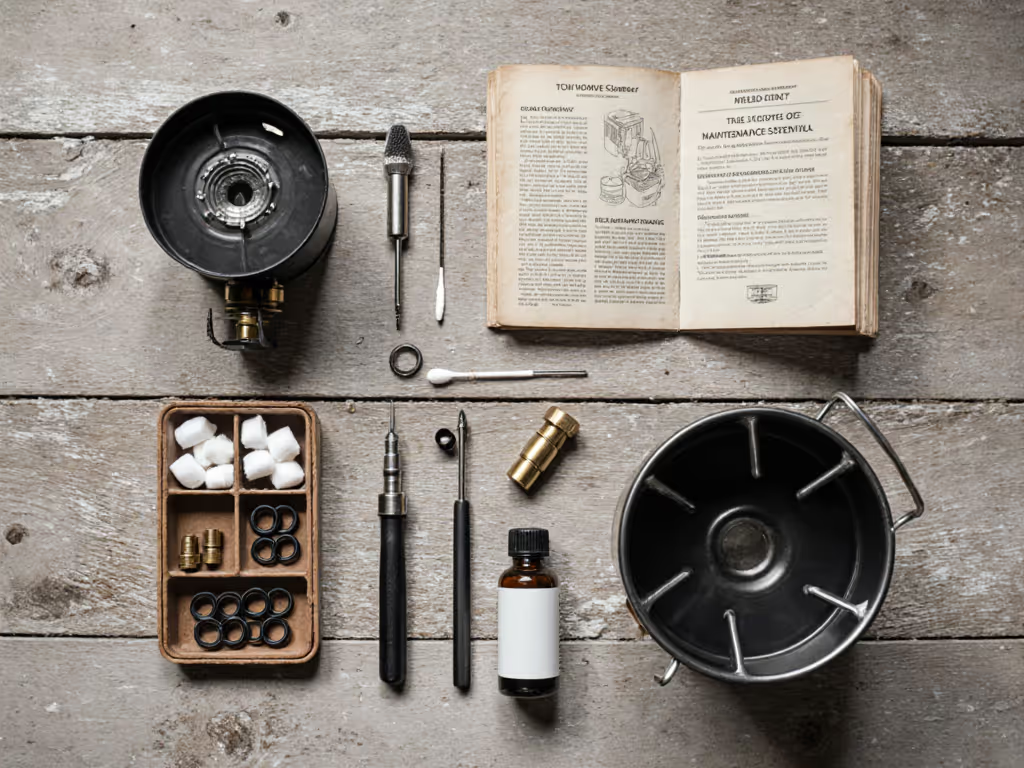
Tonight, pull your stove from storage. Disassemble the jet and hold it to a light source. If you doubt its clarity, replace it immediately (not when temperatures drop). Then, fill a bottle with isopropyl alcohol, prime your stove in a wind-shielded, open area, and verify full flame stability within 30 seconds. Your margin isn't measured in fuel ounces, but in seconds. At -20°F, a botched priming cycle wastes 12 minutes of core body heat. Do this drill now so when dawn breaks brittle and blue, your flame rises steady. Because in winter, the safest stove isn't the lightest or fastest, it's the one you've maintained exactly as its fuel demands.\
Protect the regulator from wind. Prime deliberately. Carry the spare jet.
Your water tomorrow depends on it.
Related Articles